Jellyfish are part of life on a Mediterranean island. Most summers pass without much drama, but after windy weather or a shift in currents, they can appear in numbers – and if you’ve got children in the water, it helps to know what you’re dealing with before it happens rather than after. Knowing which species you’re likely to encounter around Mallorca, what a sting actually involves, and how to handle it calmly makes beach days far less stressful.
There are around 300 species of jellyfish in the Mediterranean, but only a small handful are regularly seen around the Balearics. Most stings reported locally come from just one type.
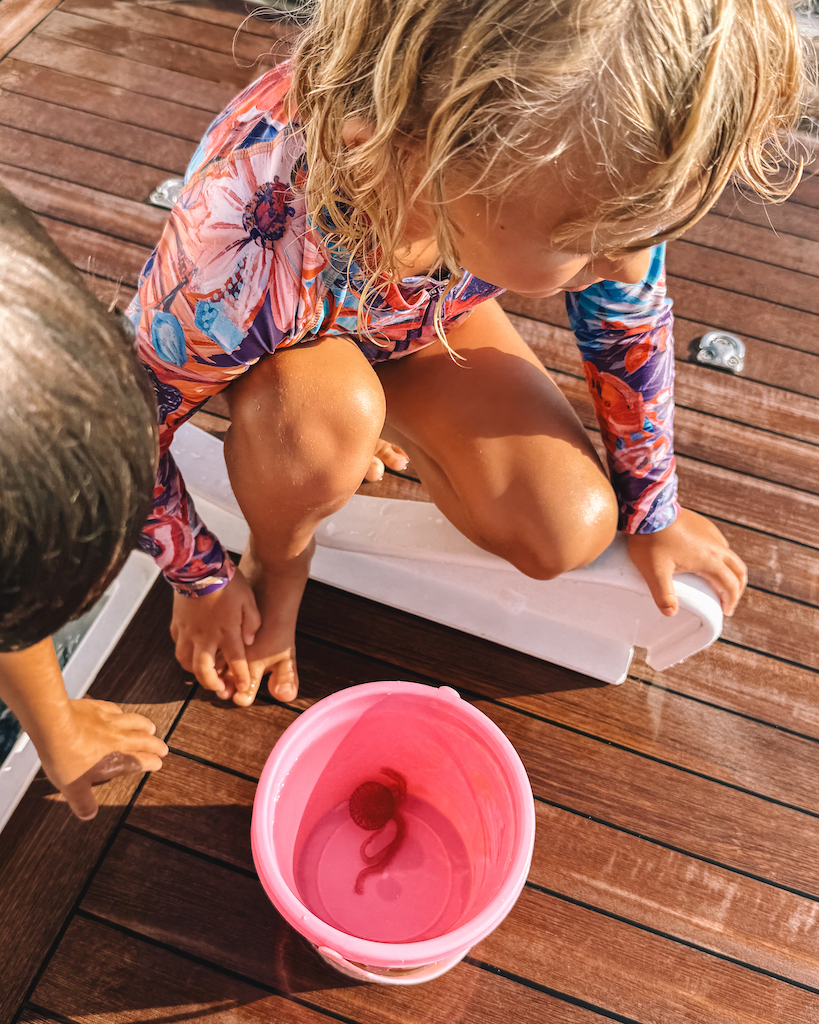
The jellyfish you’re most likely to see in Mallorca
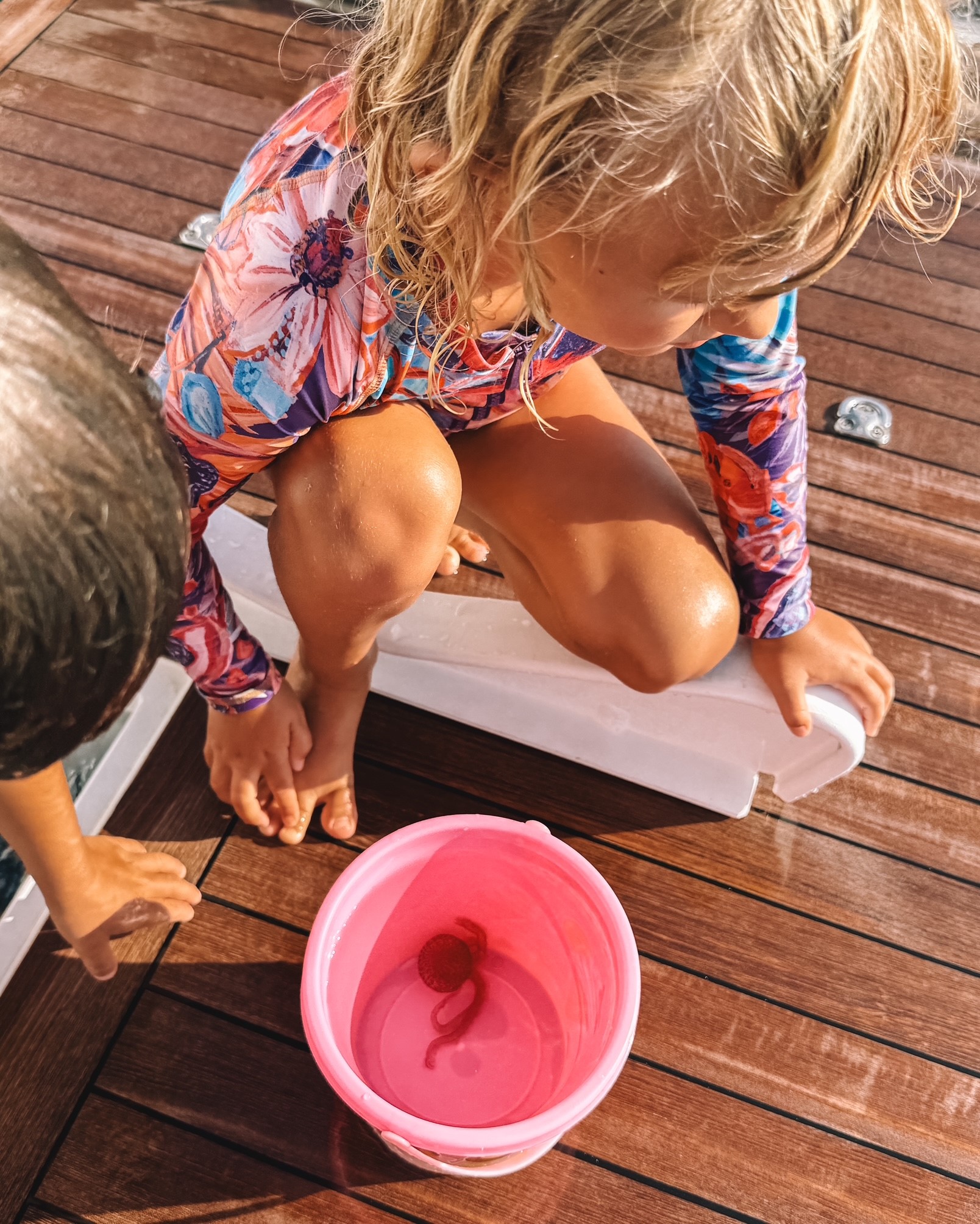
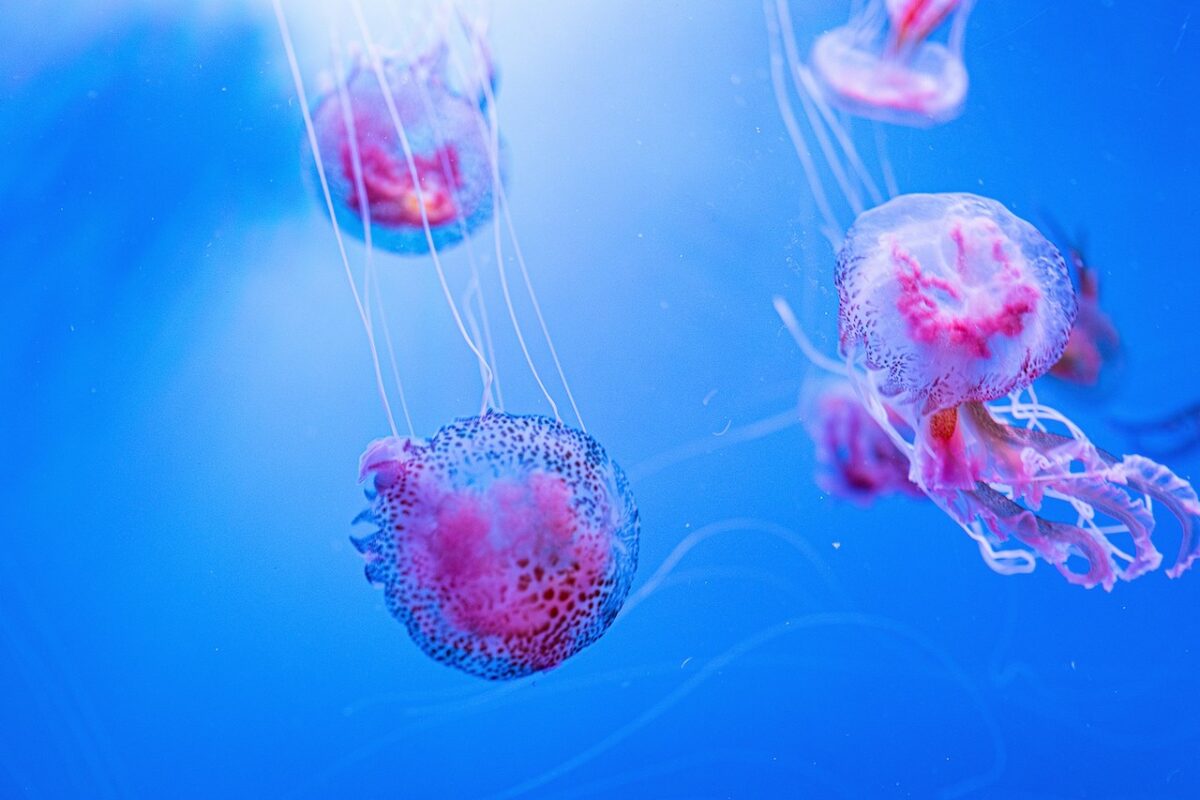
The most common species around Mallorca is Pelagia noctiluca (pictured above), recognisable by its purple-pink colour and faint glow in the water. The bell is around 6-10cm across, but the tentacles can stretch several metres and are often almost impossible to see beneath the surface. The sting is painful – similar to a bee sting – but not usually dangerous. Reactions do vary by person, which is why it’s worth knowing what to do and watch for.
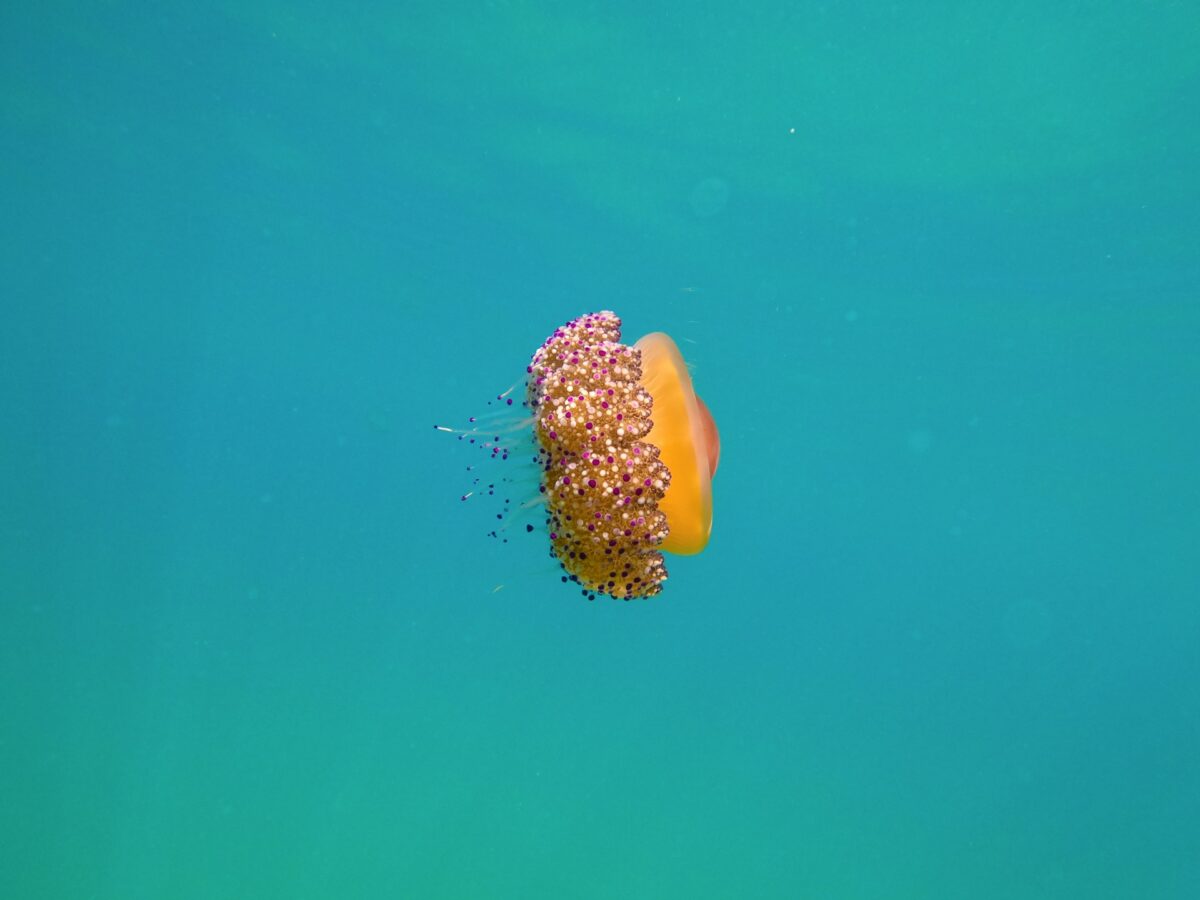
Also spotted in Mallorcan waters:
Fried egg jellyfish (Cotylorhiza tuberculata) – hard to miss at 20-35cm, with a raised yellow-orange dome. Very common and frequent. Low risk – mild irritation.
Moon jellyfish (Aurelia aurita) – large, translucent, with four distinctive purple rings at the centre. Frequently spotted. Low risk – mild sting at most.
By-the-wind sailor (Velella velella) – not technically a jellyfish but often mistaken for one. Small, blue, with a distinctive sail. Washes up on beaches in spring. Normally harmless.
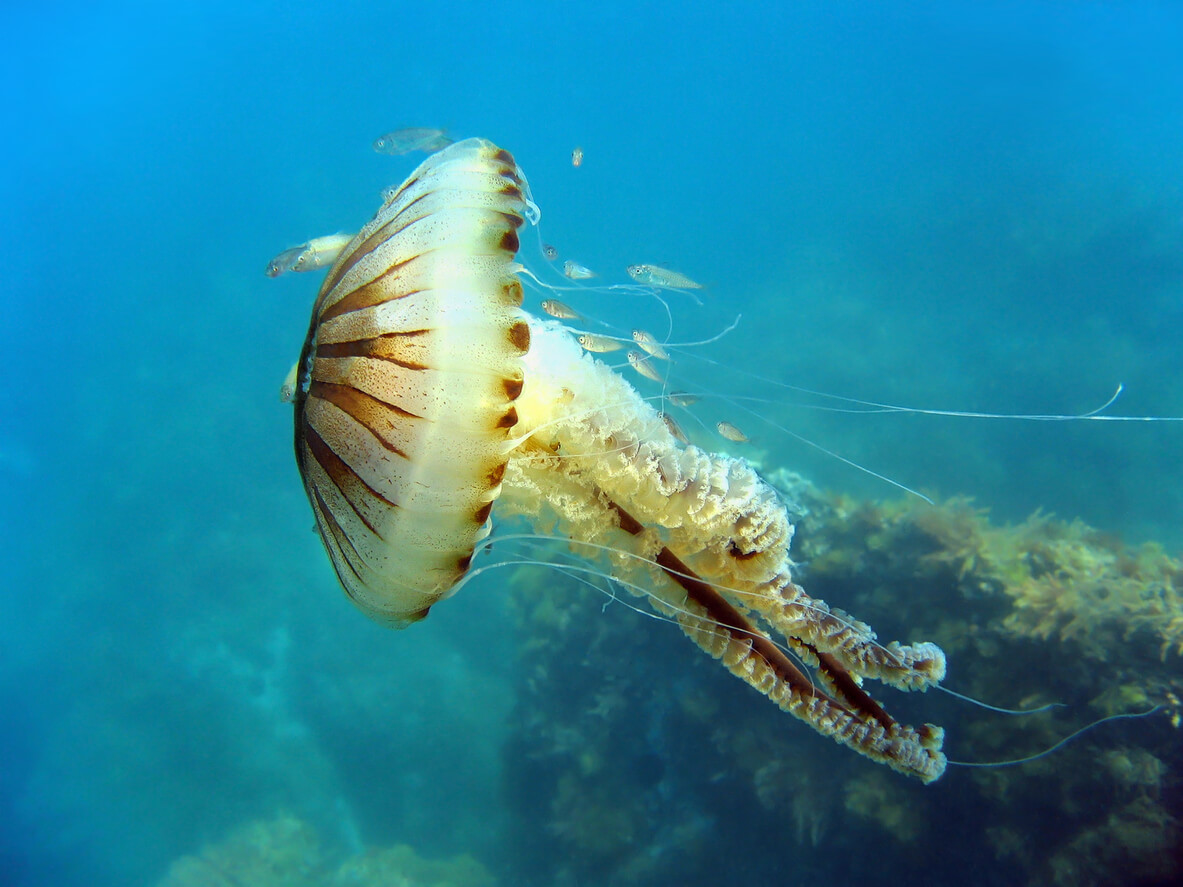
Compass jellyfish (Chrysaora hysoscella) – yellowish-white with distinctive brown V-shaped markings. Not included on the 2010 official GOIB Balearic species list, but more recently regularly reported in Mallorca waters, particularly in the north. Painful sting.
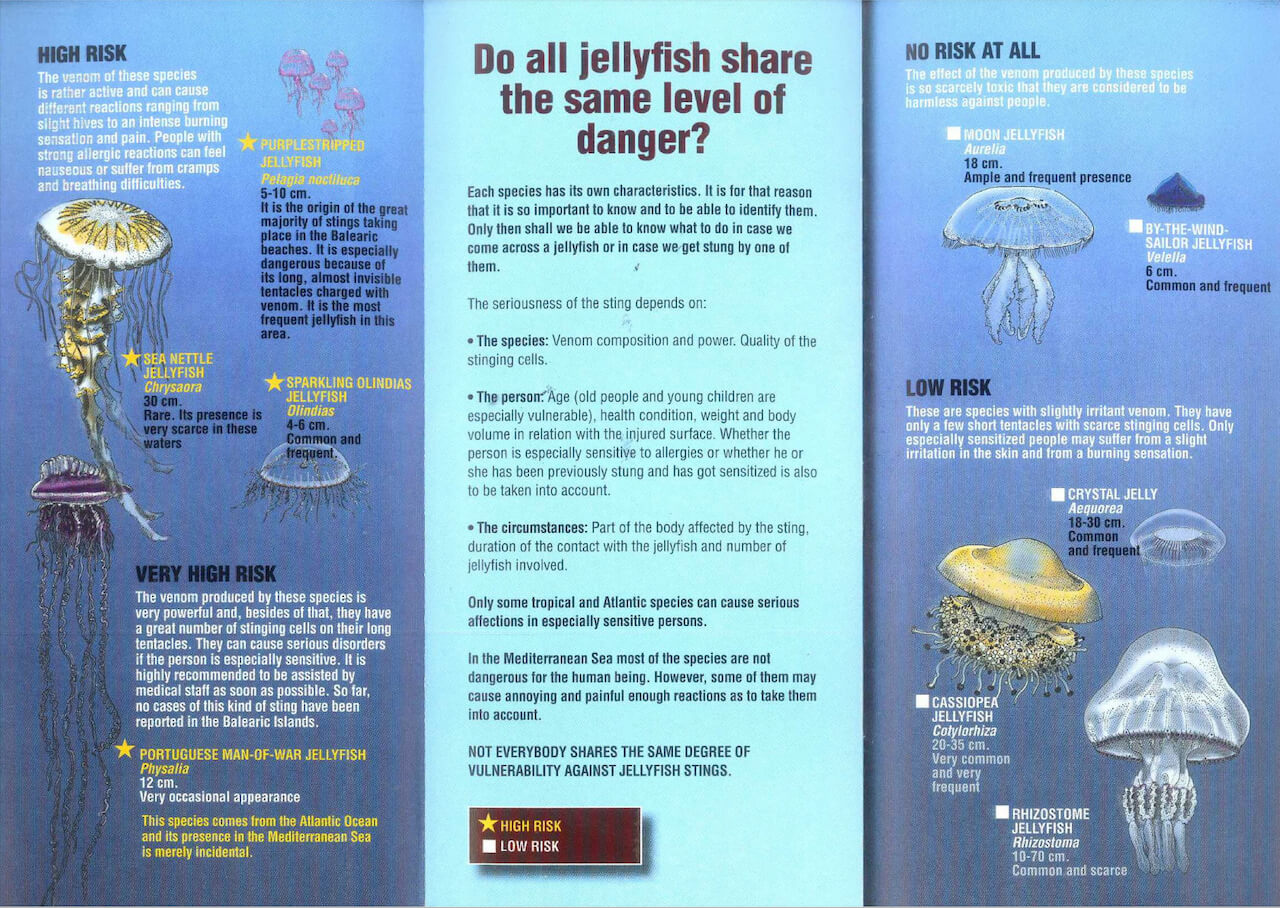
The brochure from GOIB illustrates the frequent spotted and less common jellyfish documented in Mallorcan water.
Five steps to take if you or the kids are stung by a jellyfish in Mallorca
1. Get out of the water
Leave the sea straight away. Use the edge of a credit card (or tweezers if you have them) to gently remove any tentacle fragments (the stingers) still attached. Do not rub or scratch the area, and don’t use your hands.
2. Rinse correctly
This is key. Rinse the area with sea water only. Do not use fresh water or showers – this can activate remaining stingers.
3. Ease the pain
Apply a well-sealed ice pack for 10-15 minutes. Do not apply ammonia, urine or alcohol, and do not place ice directly on the skin. Age-appropriate pain relief can be used if needed. Lifeguards are usually well-equipped for this and can help – it’s worth asking.
4. Watch for warning signs
Go straight to hospital or call 112 if there is nausea or vomiting, dizziness, muscle cramps, headache, or any generalised reaction or feeling of being unwell. If possible, identify the jellyfish and share this with medical staff.
5. A few rules for kids
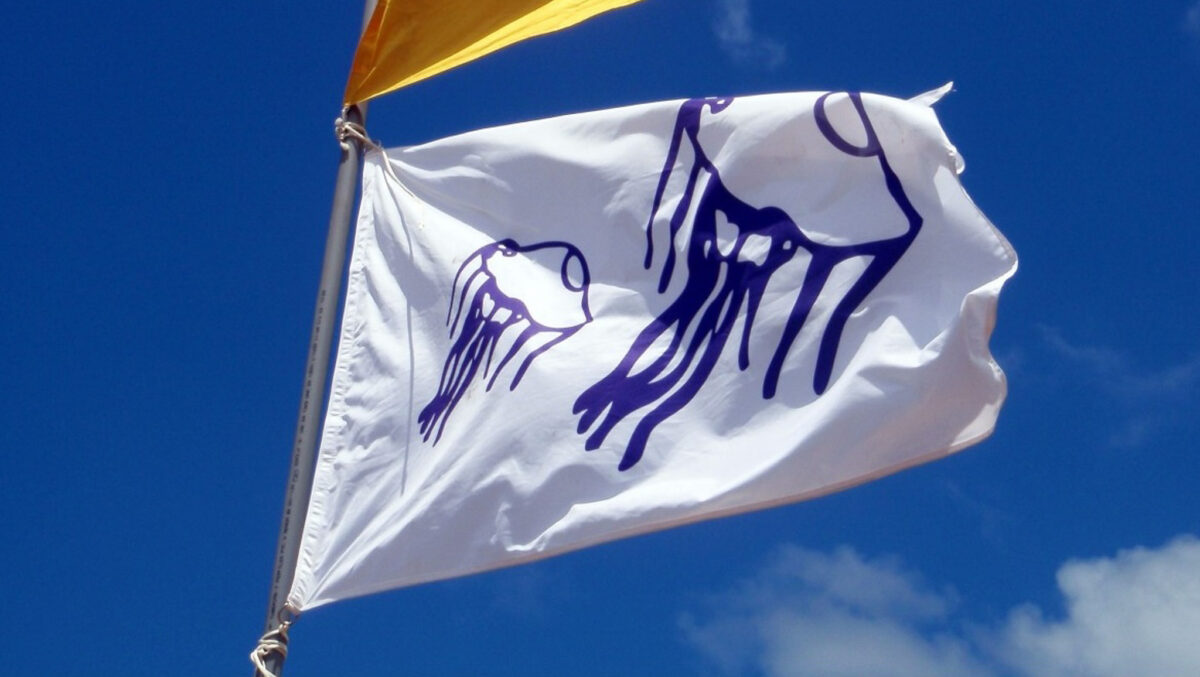
Don’t touch jellyfish, even dead ones or fragments. Venom can remain active for up to 24 hours, even out of water. Look out for the Bandera de Medusa (jellyfish flag) – if it’s flying, jellyfish have been reported nearby. Tell the lifeguard if you spot one or if someone is stung.
Why jellyfish appear more often some years
Scientists link rising jellyfish numbers to a combination of warmer sea temperatures, water pollution, and overfishing of natural predators, including sea turtles. This may also explain why species not previously common around the Balearics are now appearing.
Disclaimer: This guidance is based on the official GOIB (Govern de les Illes Balears) jellyfish brochure. It is not medical advice. If you are concerned about a sting or reaction, consult a lifeguard on the beach or call 112.
For our full guide to the best family beaches in Mallorca, including which ones have lifeguards and good facilities, head here.