On the evening of Wednesday 12 August 2026, Mallorca will be one of the best places in Europe to watch a total solar eclipse, the Moon will completely block the Sun for around one minute and 36 seconds. It’s the combination that makes this one rare: a total eclipse at sunset, over open sea, from one of Europe’s most reliably sunny coastlines. Three things that almost never line up together.
It’s the first total solar eclipse visible from Spain since 1905, and most people alive today will never get another chance to see one from Mallorca. If you’re on the island that evening, or planning to be, here’s what you need to know.
What makes this one special
Most total solar eclipses happen with the sun high overhead. This one is different: it happens at the very end of the day, with the sun less than three degrees above the horizon by the time totality begins. That low angle changes what you’ll actually see. The atmosphere will distort the eclipsed Sun and make it look larger than usual, its corona, the pale halo ring around it, will glow against an already-darkening sunset sky, and if you’re in the right spot, the whole scene will be framed by open sea.
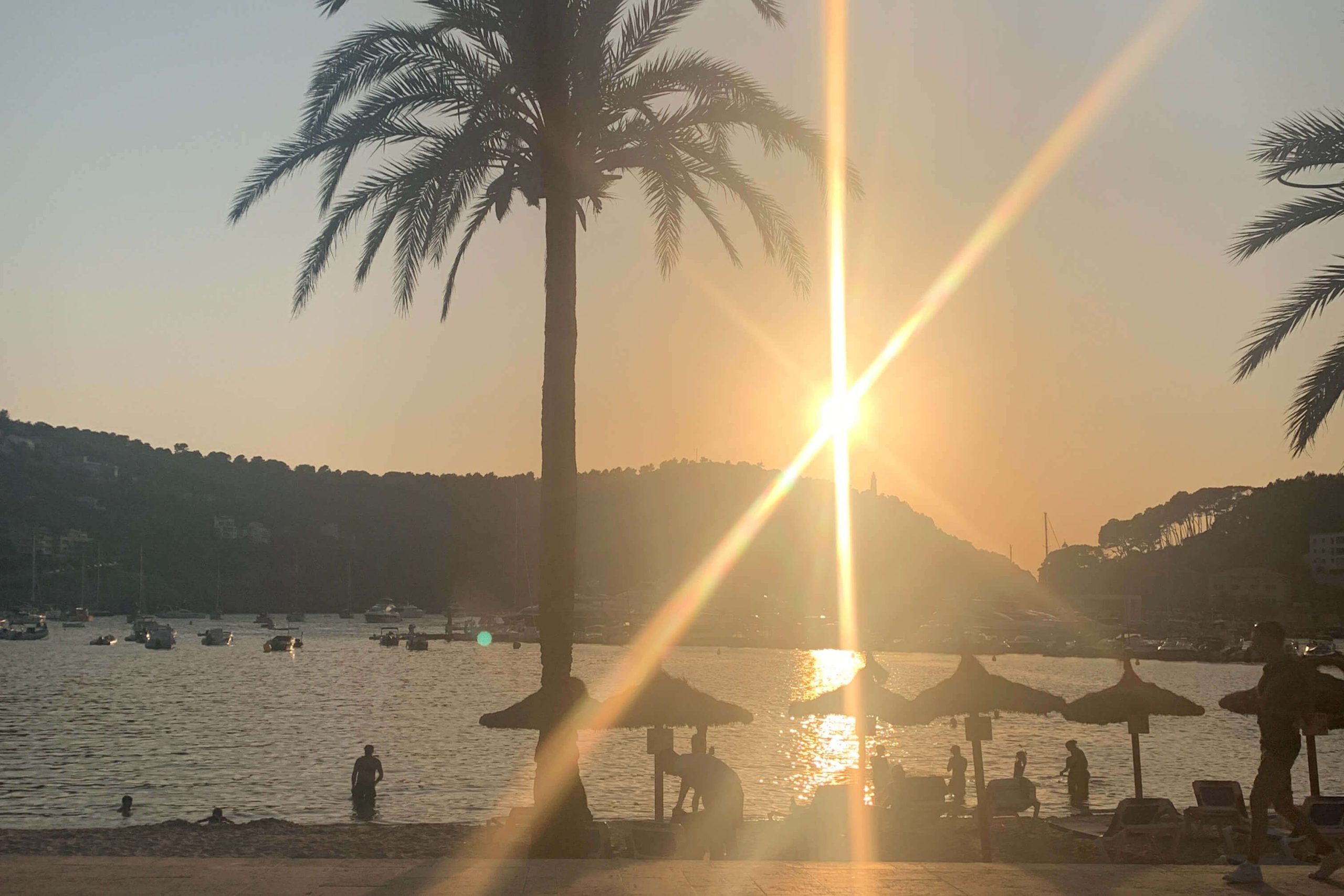
Total solar eclipses are rare. Clear-sky ones are rarer still, weather usually gets in the way. Mallorca’s advantage isn’t just being in the path of totality, it’s that August is one of the island’s driest, sunniest months. Weather modellers put the chance of clear skies on the west coast at around 75%, about as good as it gets anywhere on the path, most of which crosses open ocean.
What to expect
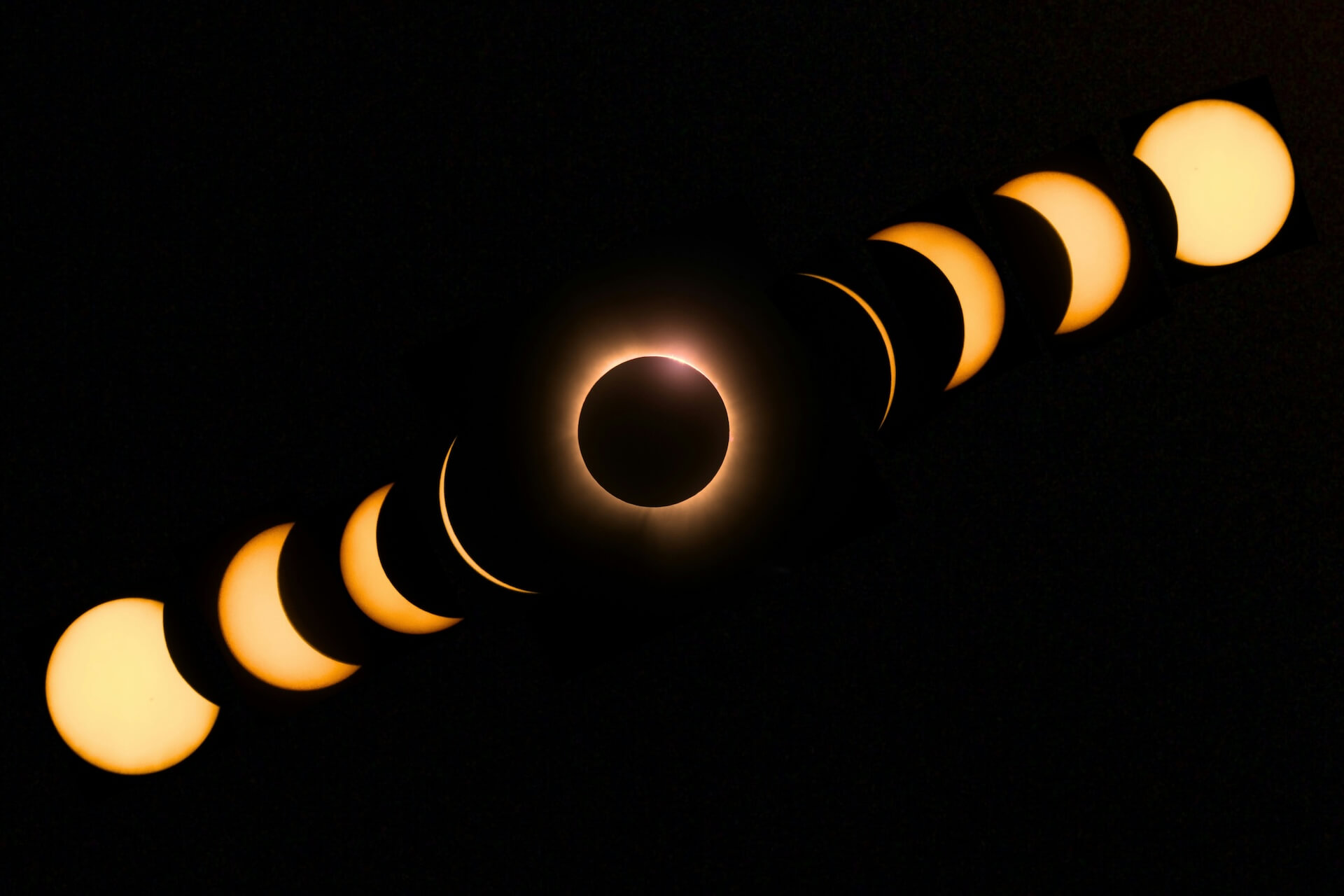
In the hour or so before totality, the Moon gradually moves across the face of the Sun – this is the partial phase, and you’ll need your eclipse glasses to watch it safely.
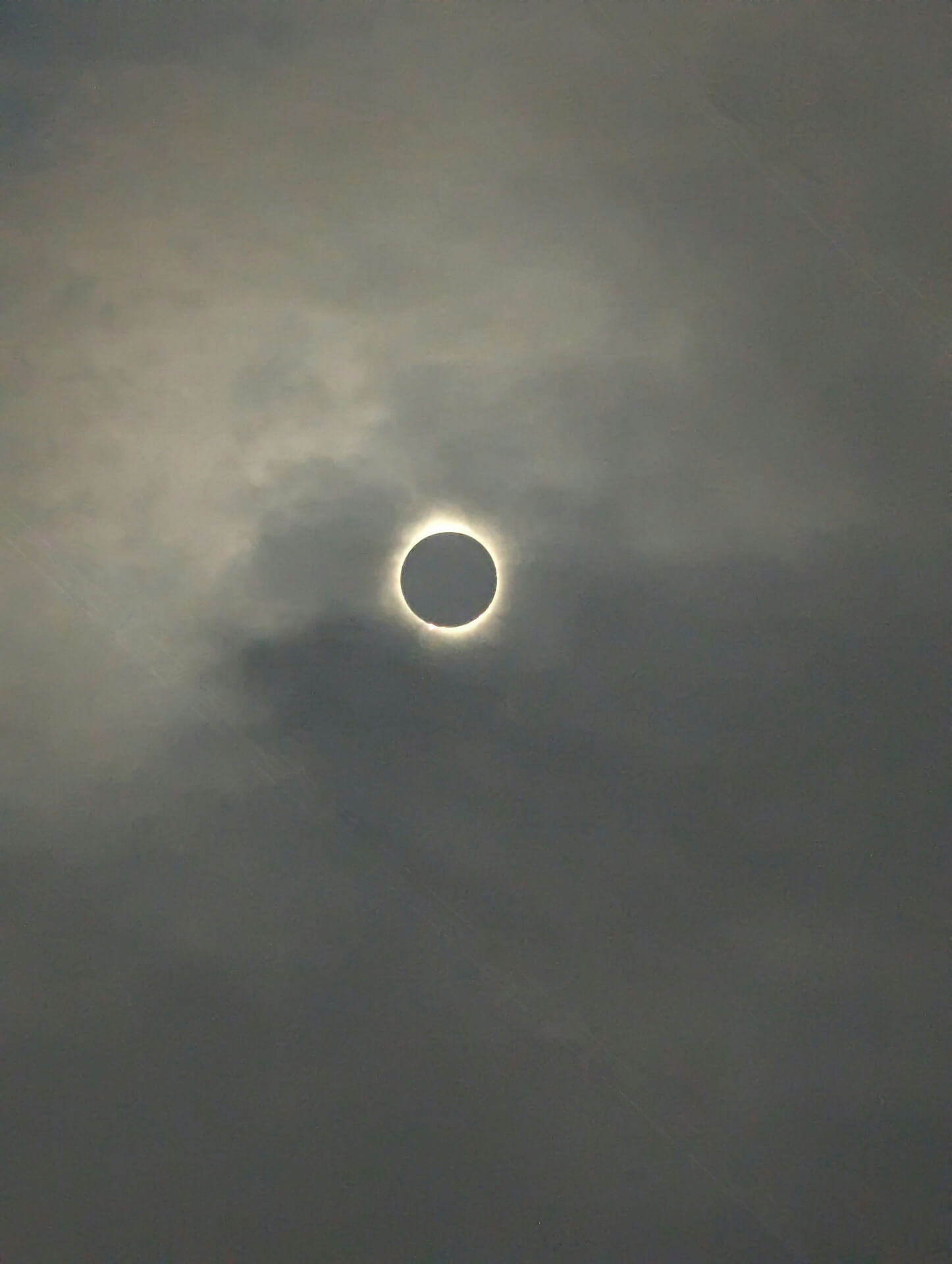
In the final minutes before totality, accounts from eclipse chasers (yes – it’s a thing!) often describe a noticeable temperature drop, birds going quiet, and streetlights flickering on automatically. The landscape takes on a strange twilight quality despite it being early evening. Then the Moon covers the Sun completely – for around 90 seconds in Mallorca – the sky darkens, and the Sun’s corona becomes visible: the outer atmosphere of the Sun, normally invisible, glowing as a soft white ring. Planets and stars may appear.
Watch for the green flash. As the eclipsed Sun’s last sliver sinks into the sea at the very end of sunset, keep your eyes on the top edge. There’s a chance of a green flash, a real atmospheric effect the Balearics see fairly often on clear evenings anyway. With the Moon still covering part of the Sun, it may look thinner or briefer than usual, and it lasts a second at most, so don’t look away once totality ends. It needs a clear sea horizon and a bit of luck to spot it!
Perseids after dark: It just so happens that 2026 is also a great year for the Perseid meteor shower. The peak falls right around 12 August, and the new moon that same day means no moonlight to wash out the fainter meteors. The best time to spot it is in the early hours of 13 August (4h to 6h), when you could see up to sixty or seventy meteors an hour under a dark sky, away from light pollution. You can catch some earlier too, but stay up into the early hours for the best of the show.
Key timings
- Partial eclipse begins: approximately 19h38
- Totality begins: approximately 20h31
- Maximum eclipse: approximately 20h32
- Totality ends: approximately 20h33 (around 1 minute 36 seconds)
- Sunset: approximately 20h48-20h49 (with the sun still in partial eclipse)
Where to watch (or avoid) by area
Despite all of Mallorca being within the path of totality, you’ll only actually see all of it if you have a clear, unobstructed view of the western sea horizon. With the Sun barely 2.5 degrees above the horizon at the critical moment, any hill, building or headland in the way will hide it completely.
The Official Viewing Points
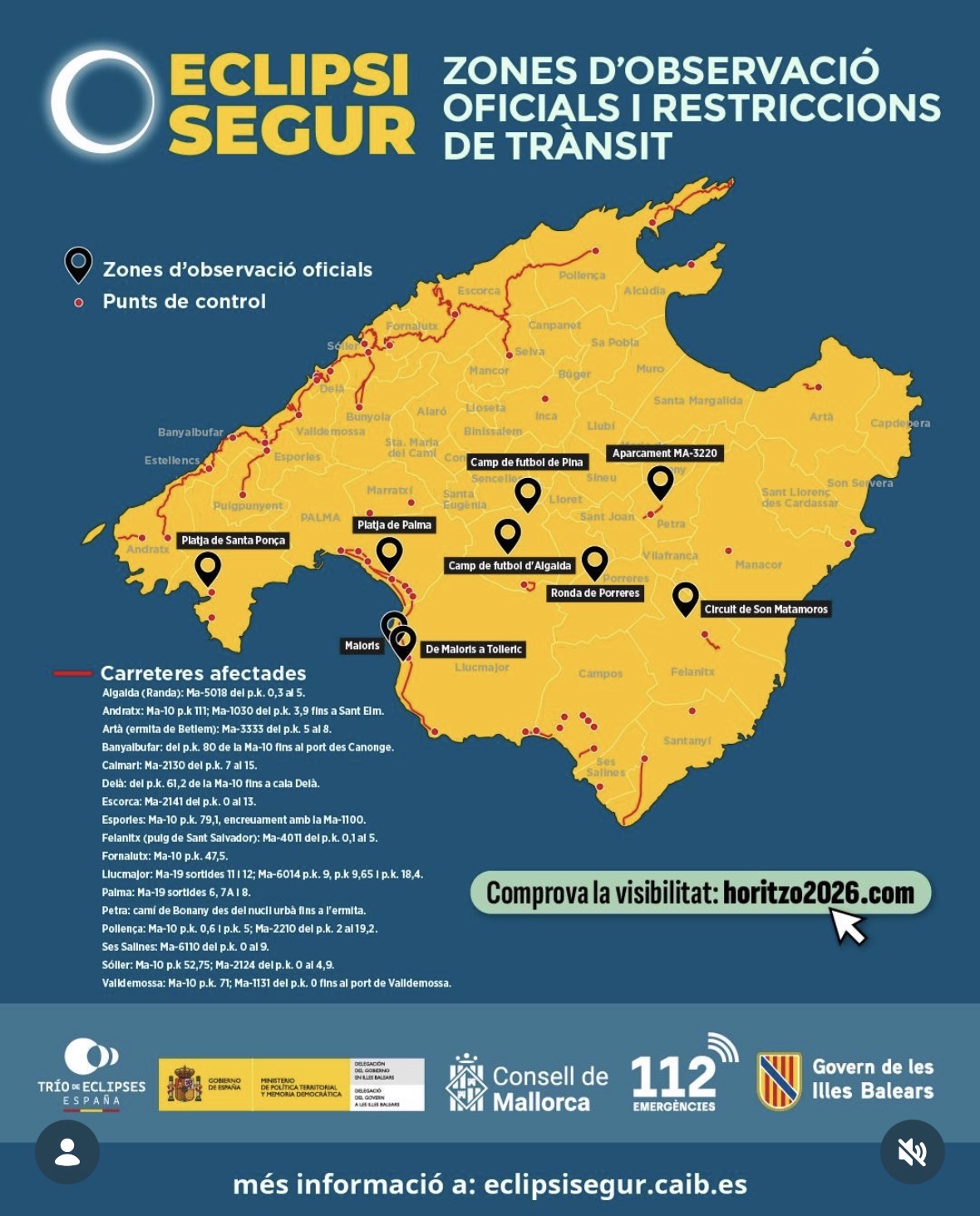
The following locations have been designated as official viewing points (updated 3.8.26), each with a maximum capacity:
- Palma: Playa de Palma, around 75,000 people
- Porreres: Ronda de Porreres
- Calvià: Santa Ponsa Beach, around 8,477 people
- Llucmajor: Maioris to Tolleric coastal stretch
- Llucmajor: Maioris
- Algaida: Algaida football ground
- Algaida (Pina): Pina football ground
- Felanitx: Circuit de Son Matamoros, around 800 cars
Note that these official observation areas are not the places from which the eclipse is best seen; they are the spaces from which authorities can best guarantee safety and crowd control measures.
If you’re wondering where I would watch the eclipse with my own family, my first choice would be a boat – from Sóller, Santa Ponsa, Andratx or Colònia de Sant Jordi if I;m being picky! Being out on the water gives you the best chance of seeing the eclipse right through to sunset. Most organised trips are now fully booked, though, and the remaining spaces are often priced prohibitively for large families – €100 + per person. Private charters are a very similar story.
If a boat isn’t an option, and your determined to see totality, I’d choose one of the official viewing locations, or head early in the day to the beaches just south of Colònia de Sant Jordi – note official traffic restrictions will impact both from 15h. Of the official viewing points, my picks would be the southern end of Playa de Palma, parts of Llucmajor, or the Maioris to Tolleric coastal stretch, although take care as there are steep cliff edges in places.
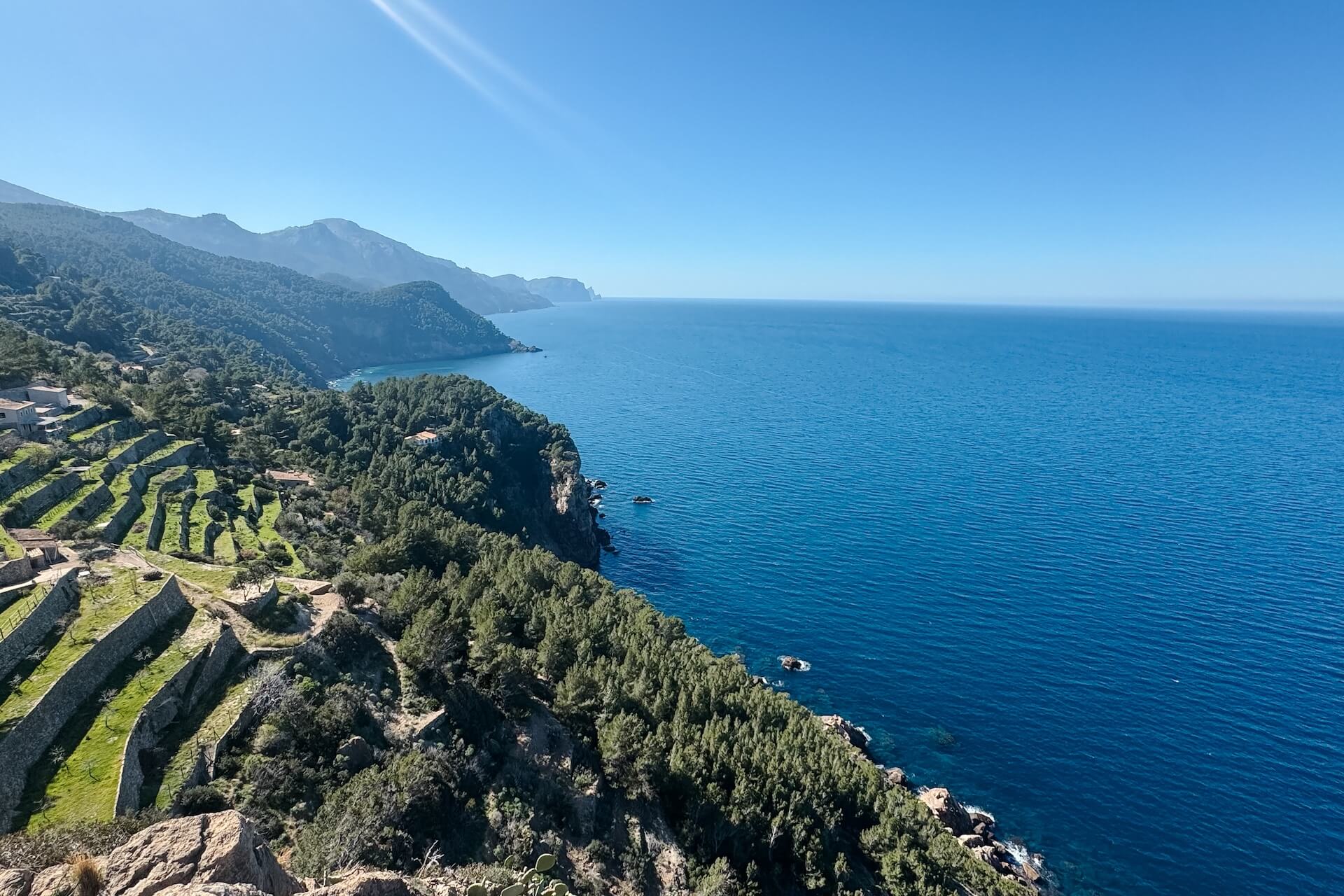
While the Tramuntana coast may offer some of the best views on paper, parking restrictions, traffic and clifftop viewpoints make it a less practical choice for most families who aren’t staying locally – even Port de Sóller has viewing restrictions with significant traffic expected.
Traffic Restrictions
The Govern de les Illes Balears has confirmed mobility restrictions on around twenty roads across Mallorca, focused mainly on access to the Serra de Tramuntana and other ‘at risk’ areas – details by region below. This is to ensure access to emergency vehicles and to help minimise overcrowding.
General rules (apply everywhere unless a specific time is noted)
- Monitoring begins Tuesday 11th August on main Tramuntana access points.
- On the day, mobility control intensifies from 10h, with continuous monitoring of capacity and traffic.
- General restrictions come into force at 15h (may start earlier if an area reaches capacity or for safety reasons) and run until 21h.
- These restrictions apply to all motor vehicles, including motorcycles and mopeds.
- Standard exceptions for all places mentioned below: residents, people who can show they need to reach their accommodation, essential services, regular public transport, and accredited workers.
- Palma, Calvià and Felanitx each run their own special device with their own rules and timings, rather than following the general 15h to 21h restriction below. See more information here.
Confirmed Traffic Restrictions and controls
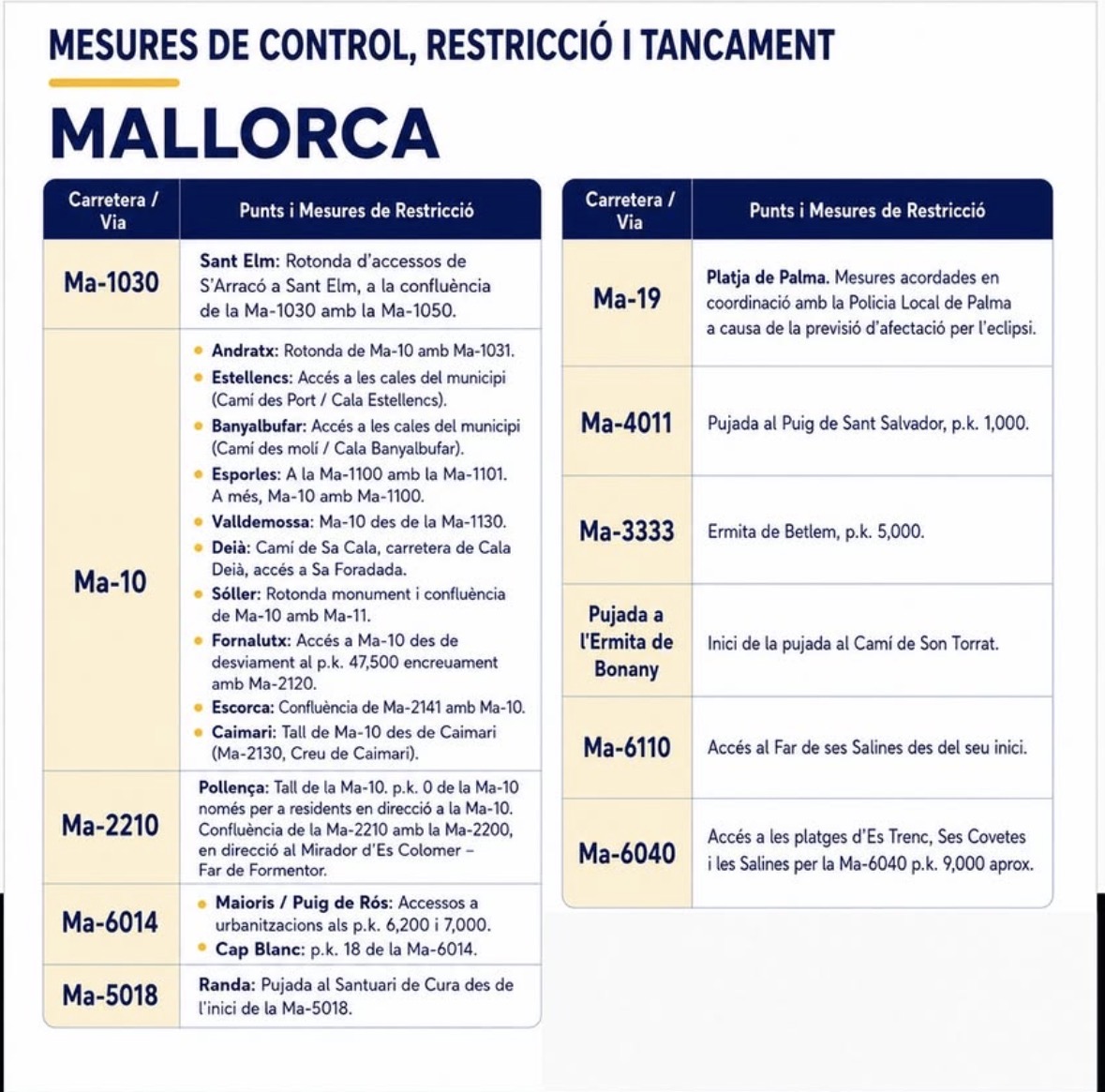
- Andratx / Sant Elm
Closed: access from the S’Arracó roundabout (Ma-1030/Ma-1050 junction).
- Estellencs
Closed: Camí des Port, access to the town’s coves.
- Banyalbufar
Closed: Camí des Molí, the road to Cala Banyalbufar.
- Esporles
Closed: Ma-1100/Ma-1101 junction and the Ma-10/Ma-1100 crossing.
- Valldemossa
Closed: Ma-10 from the Ma-1130.
- Deià
Closed: Camí de Sa Cala, the road to Cala Deià, and access to Sa Foradada.
- Port de Sóller
Controls (not full closure) at the roundabout by the monument and the Ma-10/Ma-11 junction.
- Fornalutx
Closed: Ma-10 from the Ma-2120 turn-off (km 47,500). - Escorca / Caimari
Closed: Ma-2141/Ma-10 junction (Escorca) and the Ma-10 from the Ma-2130 at Creu de Caimari.
- Pollença / Formentor
Closed: kilometre point 0 of the Ma-2210, and the junction to Mirador d’Es Colomer and Far de Formentor. One of the most tightly controlled routes on the island.
- Palma / Platja de Palma
Bellver Castle and its forest closed for the day.
Restrictions: Ma-19 exits 6, 7A, 8, 11 and 12 (towards Llucmajor) closed, in two phases.- 8h to 12h: access to Platja de Palma limited to residents, accredited workers and guests of accommodation with parking, all requiring accreditation.
- From 12h: closure extends to vehicles generally, with the same standard exceptions.
- Anyone travelling on foot, by bike or public transport doesn’t need accreditation at any point.
- Calvià
Closed: El Toro, Illes Malgrats and Puig de sa Morisca miradors, and Puig de sa Morisca itself.
When: traffic closed from 17h at these viewpoints. Santa Ponça itself is on a different, earlier timeline: as an official observation zone, its access controls start 24 hours ahead of everywhere else, from 11 August, with capacity monitored from then and access closed once the site is full.
Access: residents and anyone who can show a justified journey.
- Campos (Es Trenc, Ses Covetes)
Closed: Ma-6040 access restricted from around km 9,000.
- Llucmajor
Closed: Maioris and Puig de Ros access at km 6,200 and km 7,000; Cap Blanc from km 18 of the Ma-6014.
When: general window, 15h to 21h.
Access: standard exceptions above. Playa de Palma (Llucmajor side) and the Maioris to Tolleric coastal stretch are official viewing points here, subject to capacity limits.
- Santanyí (Ses Salines, Cap de Ses Salines)
Closed: Ma-6040 continuation towards Ses Salines; Ma-6110 to Cap de Ses Salines lighthouse, closed from the start.
- Inland official viewing points
Circuit de Son Matamoros, Ronda de Porreres, Algaida and Pina football grounds, and the MA-3220 car park in Petra. No specific closure or access restriction found for these beyond standard capacity limits.
Restrictions can change up to the event itself. The government has said timings may be brought forward if an area reaches capacity or for safety reasons. Check the official website for the latest before you set off with traffic restrictions detailed here.
Safety – eclipse glasses
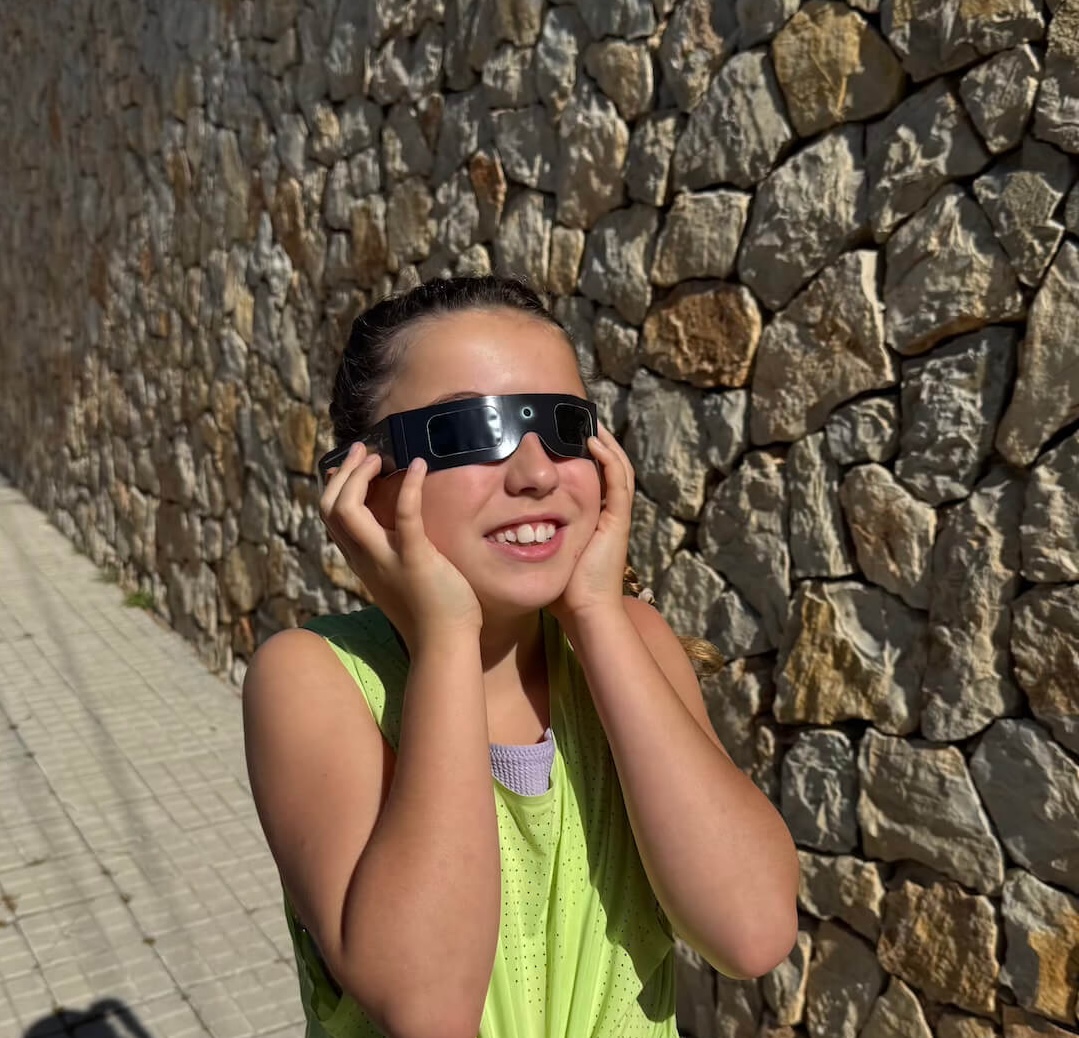
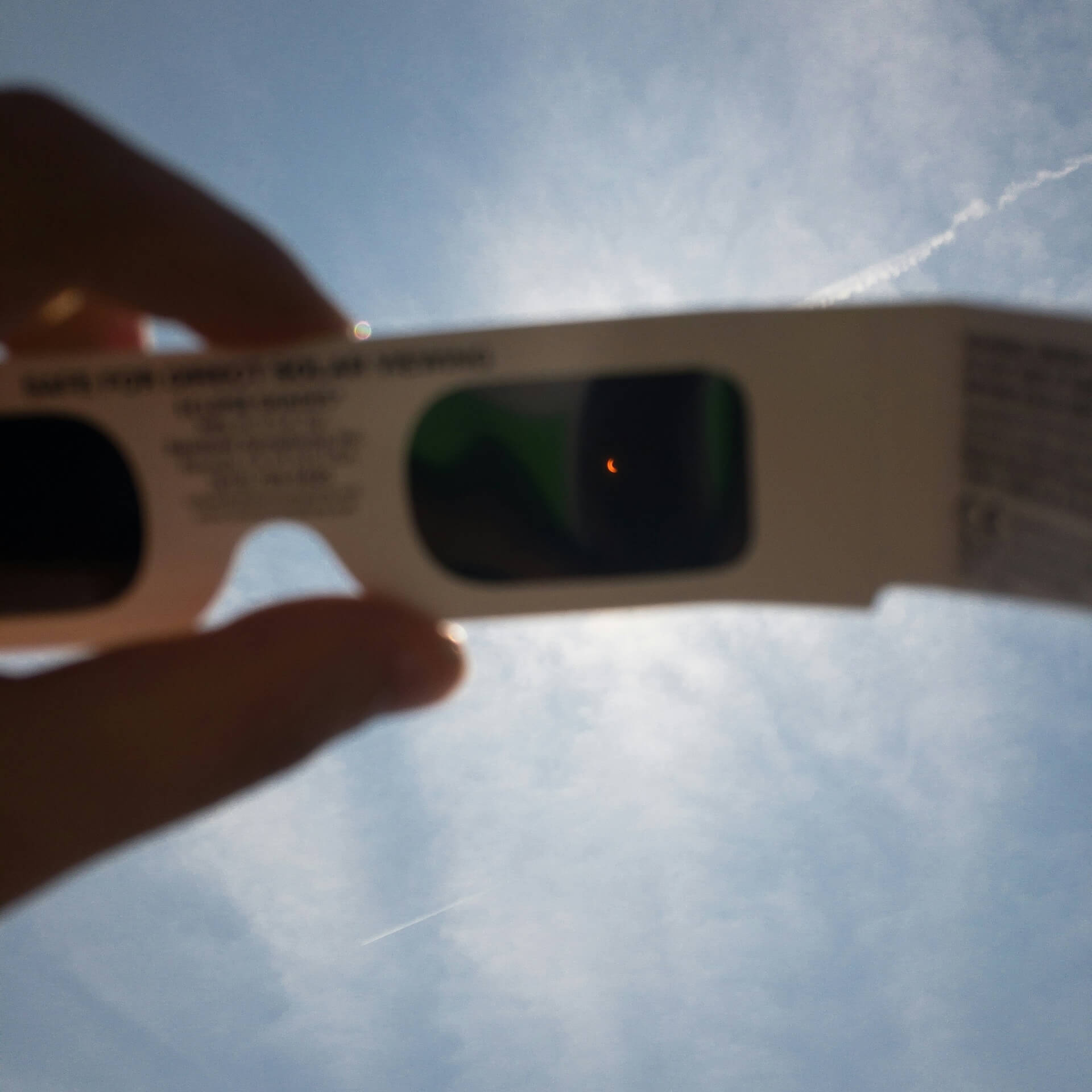
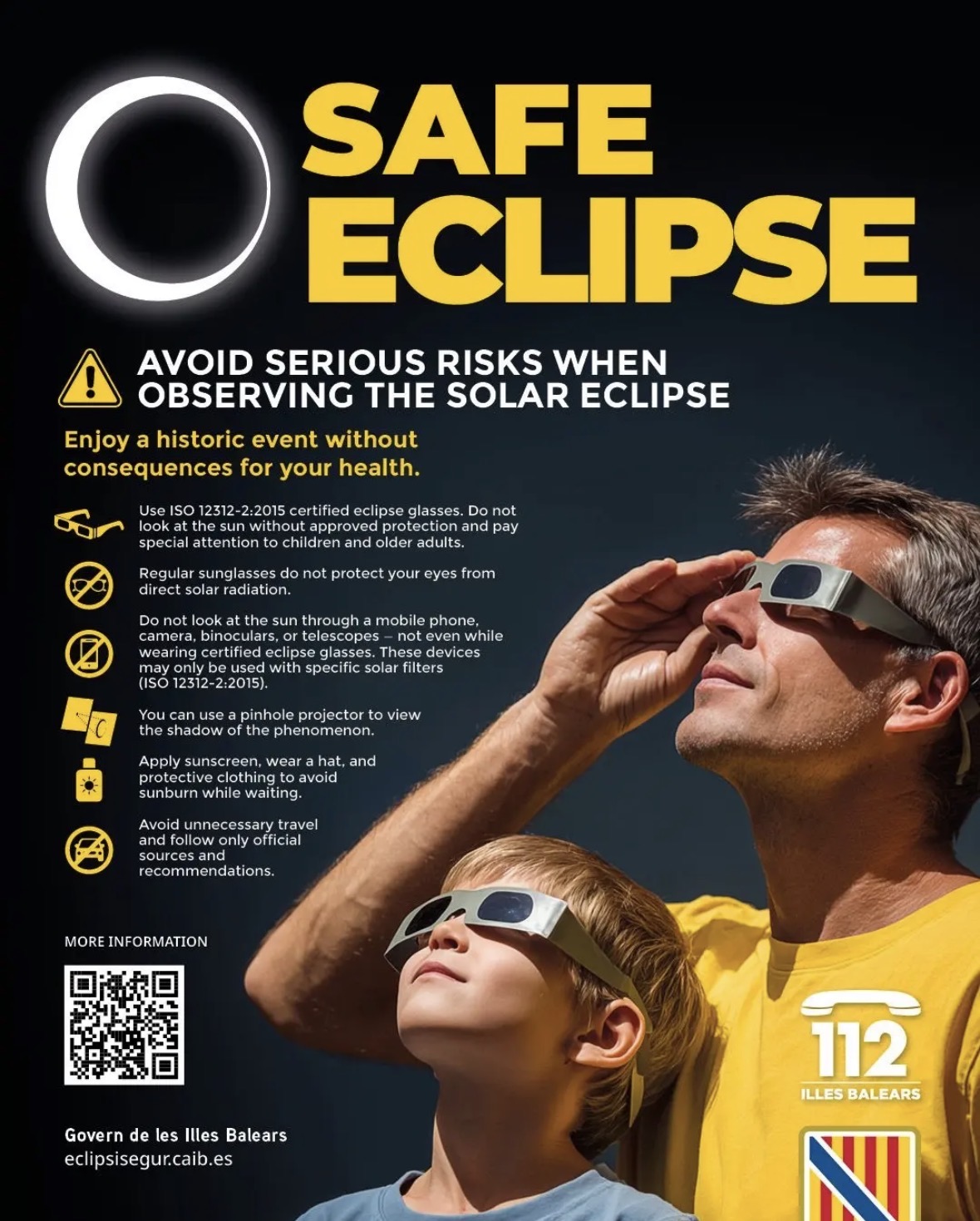
Looking at the sun is never a great idea, but staring at it for an extended period during a partial eclipse can cause serious and permanent eye damage, and children are at the highest risk since curiosity often beats caution. The retina has no pain receptors, so this damage happens without any warning signs, a child won’t feel it happening and may not say anything until hours later, if at all.
Standard sunglasses offer no protection, you need glasses certified to ISO 12312-2. The only safe time to look without them is during totality itself, and even then it’s worth counting down with your kids so nobody keeps their glasses off a second too long. Buy your glasses in advance at absoluteeclipse.eu or you can find certified glasses at most pharmacies, and many smaller supermarkets and convenience stores.
A note on the weather
75% clear sky probability is good – but it’s not a guarantee. If cloud moves in, the sky will still darken during totality and temperatures will drop. Sea breezes often blow away afternoon clouds but even an obscured eclipse at sunset over the Mediterranean is not a bad evening, and will be one to remember for the kids.
Where to stay for the eclipse
Location matters on 12 August. The west and northwest coast puts you closest to the best viewpoints, and for families, being within walking distance means no parking stress on what will be one of the busiest nights Mallorca has seen in years. Availability is extremely limited at this point, so check sooner rather than later.
Jumeirah Port Sóller ★★★★★ Port de Sóller clifftop – The luxury option, with a clifftop position and spectacular views across the bay, two pools, a spa and a kids’ club from four years (under-fours welcome with a parent). Not on the beach, but a private shuttle runs regularly to the waterfront. The setting is exceptional and the level of service is a cut above anything else in the area. For eclipse week the hotel is running a dedicated four-day programme including an astronomy masterclass and guided telescope viewing on the night. It’s the only hotel on this list that guarantees unobstructed views of totality from the property itself.
Hotel Esplèndido ★★★★★ Port de Sóller seafront – rRight on the seafront with one of the best positions in the bay – rooftop pool for families, direct promenade access and stunning views of the sunset. No dedicated kids’ club, but well set up for families and you have more than enough to keep the kids busy on the beach and promenade playgrounds nearby. Large family rooms miss out on the sea view but with two separate bedrooms and tons of space, these work well with siblings or parents that need a bit of space. Parent-pleasing spa and adults-only infinity pool for when small people are asleep.
Belmond La Residencia ★★★★★ Deià – a short drive from Mirador de Sa Foradada, one of the best viewpoints on the west coast. Beautiful golden-stone setting in the Tramuntana, with a kids’ club and plenty of space to roam. You’ll have to hike a short distance along the coast for a seaview though – manageable with children 8yrs +, alternatively head out of the Cala Deià’s cove on a private boat trip.
Es Molí ★★★★ Deià – set on a hillside with panoramic sea views and access to Cala Deià via complimentary shuttle. A more classic, low-key option with lovely gardens and a spring-fed pool. No kids’ club, but well suited to families who want space and calm over organised activities. Eclipse options are the same as La Residencia.
Hotel Eden ★★★★ Port de Sóller seafront – a more relaxed option in the same bay, good pool overlooking the sea and easy beach access. Family rooms fit four, some with balconies to catch almost all of the sunset.
Hotel Es Port ★★★★ Port de Sóller – family-run and set in 40,000sqm of gardens just outside the port, with a traditional Mallorcan feel. Indoor pool, spa, two restaurants and tennis courts on site. A charming option for families who want space and a bit of buffer from the crowds. Walk (30mins) to eclipse viewpoints along the coast – many will be cliff-edge however so close parent supervision required.
If you’d rather have a private base for the week, we work with a handpicked portfolio of villas on the west coast. Get in touch to find out what’s available.
For interactive maps and precise timings for any location in Mallorca, visit visualizadores.ign.es or the official eclipsisegur.caib.es