For families who like to get out and explore, Mallorca has more to offer than most visitors ever discover. Over 1000 kilometres of trails cross the island, from the dramatic peaks and ancient gorges of the UNESCO-listed Serra de Tramuntana in the northwest to the gentler coastal paths and nature reserves of the east and south. Minus a couple of hot summer months, it’s a year-round destination for walking with kids, and a brilliant base for a spring or autumn adventure that goes well beyond the beach.
This guide brings together twelve of our favourite family friendly hikes, tried and tested with children from age four through to teen.
Easy Walks and Nature Trails in Mallorca
Right around the time they’re too big to carry but too small to manage much distance, these are the routes to start with. Wide paths, safe spaces to run ahead, wildlife to spot, just remember the snacks to keep them smiling all the way back.
1.
Ses Fonts Ufanes, Campanet
Route Type: Circular woodland walk · 3km · 1hr
Difficulty: Easy · All ages · Pushchair friendly
Shade: Lots · No swim stop
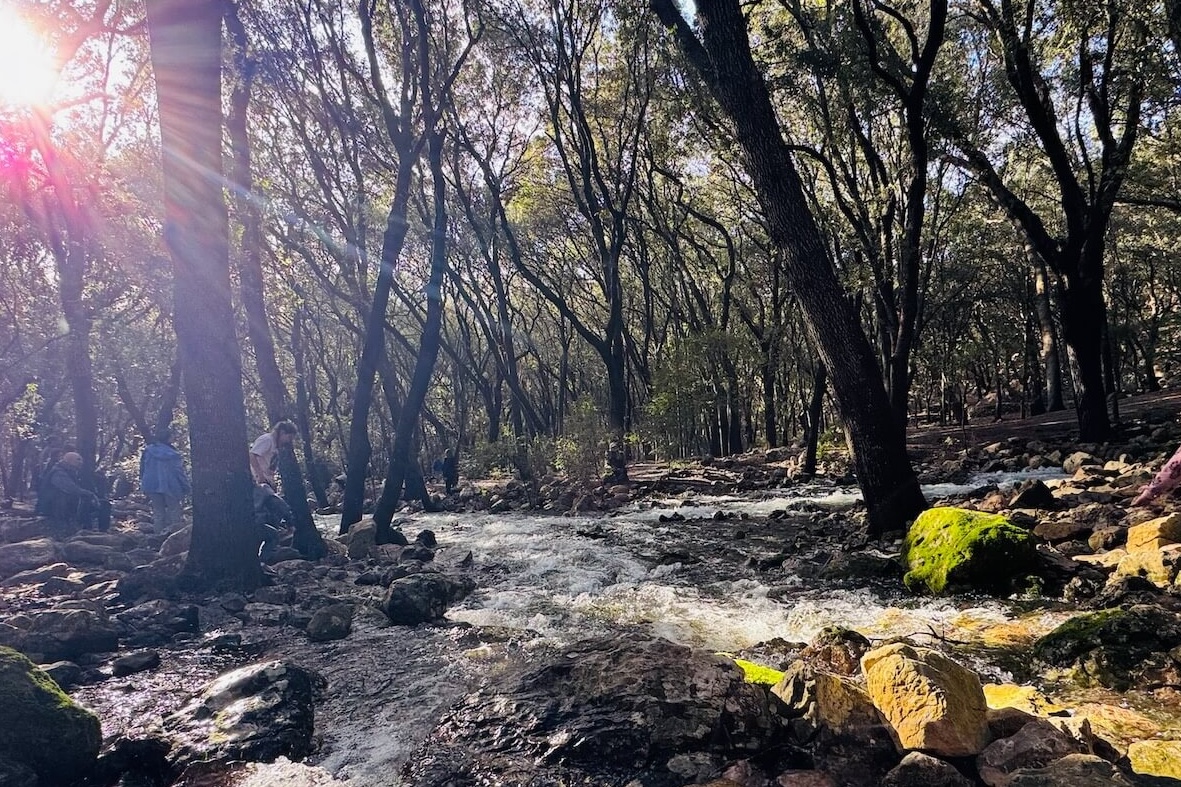
A short circular walk through open fields and into carob and oak forest, with plenty to keep children busy along the way whether or not the springs are flowing.
Look out for the small stone huts in the forest, known as barraques de carboner: charcoal makers lived and worked here through the season well into the 20th century, tending slow burning wood, before eventually taking the charcoal by mule to nearby villages.
The springs only appear after significant rainfall, when underground water pressure forces streams up through the forest floor in a dozen different places at once. On the right day in winter or early spring, you walk into a woodland that appears to be erupting with water. On a dry day the forest is still worth the walk, with good nature spotting, signposted flora and fauna, and toilets at the visitor centre halfway round.
When to walk: November to March after rain but still a great nature walk in the dry season. Pack wellies or spare socks after rain
Location & Parking: Free car park at Finca Pública de Gabelli Petit, signposted from Campanet
Full route notes, parking and timing advice Ses Fonts Ufanes guide →
2.
S’Albufera Natural Park, Playa de Muro
Route Type: four marked routes · 750m–11.5km · 45min–3hrs
Difficulty: Easy · All ages · Pushchair friendly
Shade: Moderate · No swim stop
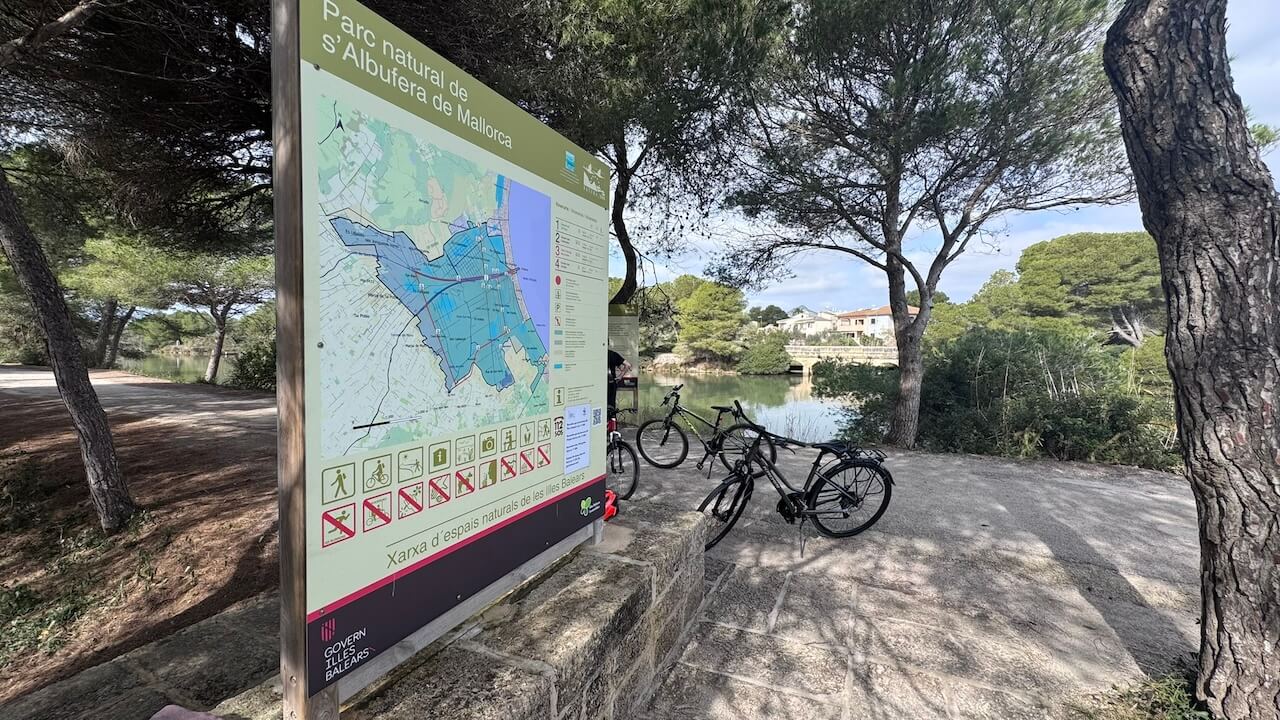
The largest wetland in the Balearic Islands, right behind Playa de Muro’s beach. Four marked routes set out from the visitor centre across 1,700 hectares of reeds, water canals and dunes, all of them flat and well signposted.
Over 300 bird species have been recorded here, including herons, ospreys and flamingos. There are plenty of wooden hides along the routes where you can watch the water birds – ideally in silence if possible! Even if the children aren’t remotely interested in birds, they’ll want to climb the hides. Along the way you might also spot frogs, horses, turtles, even a snake. Bring binoculars if you have them.
The Visitor Centre is well worth a quick stop for its nature photography exhibit and local wildlife information. No picnic areas or café inside the park, but there’s a drinks vending machine at the Visitor Centre. Pack snacks and plenty of water. Mosquito repellent in summer.
When to walk: Spring and autumn for migration season. Flamingos easiest to spot in winter and spring.
Parking: Small free car park at the park entrance, otherwise roadside behind Playa de Muro.
More information and route options: S’Albufera guide → & Exploring Playa De Muro & Albufera By Bike →
3.
Punta de n’Amer, Cala Millor
Route Type: Out-and-back or inland loop · 5km · 1.25hrs
Difficulty: Easy · All ages · Off-road pushchair friendly
Shade: Partial · Swim stop either end
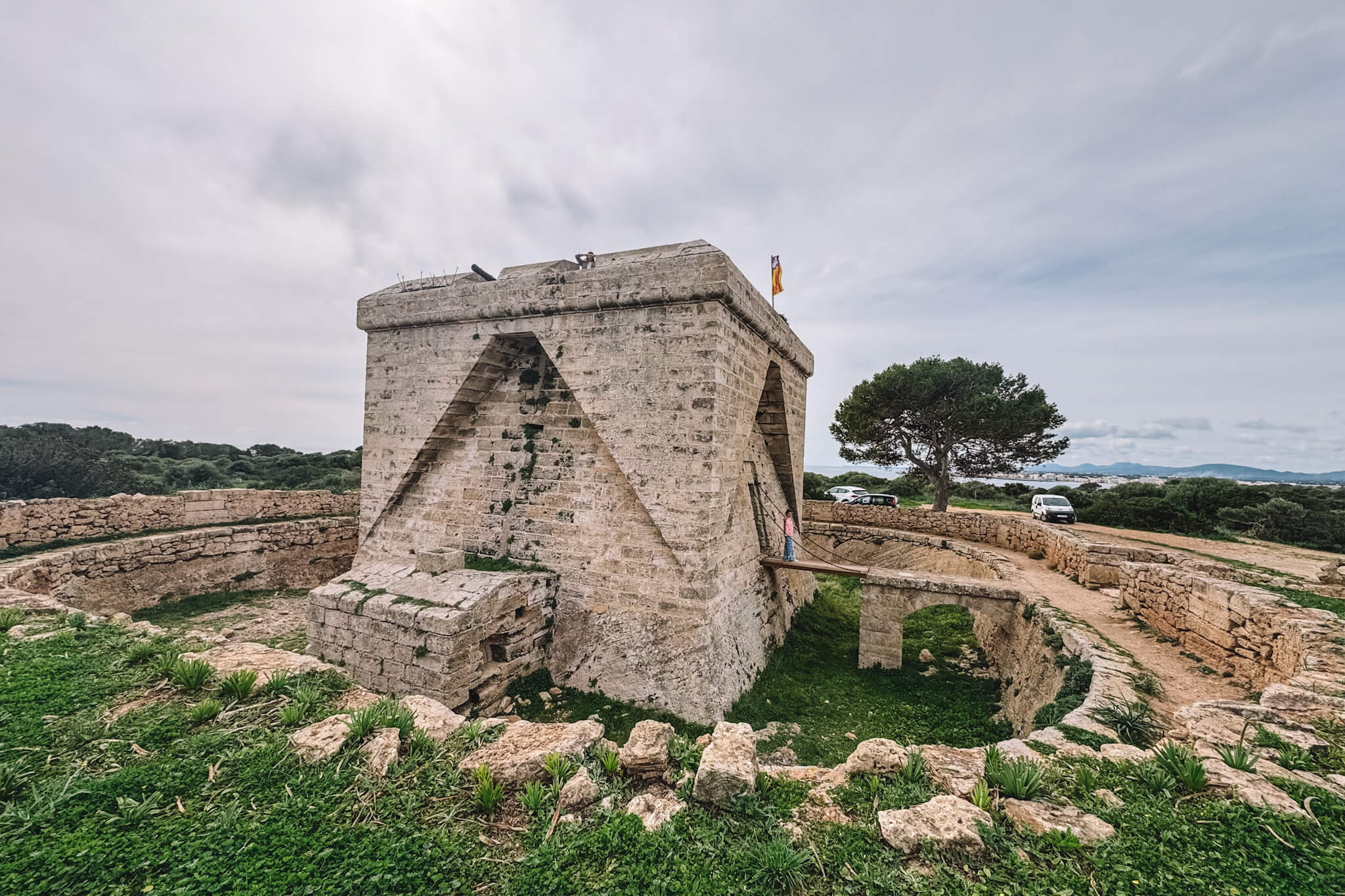
An easy walk across a protected headland between from Cala Millor to Sa Coma (or reverse), with a 17th-century stone watchtower at the midpoint, complete with rooftop cannons and a small café. The path is mostly flat and sandy, just about manageable with an off-road pushchair and easy for small legs.
There’s space to run, birds to spot, and a cat and chicken commune somewhere along the route that will amuse the kids. The tower is next to a café with a surprisingly good aquarium inside. Keep a close eye on small children inside the tower: the walls are low.
When to walk: This one works year-round, start early in warmer months.
Parking: Plenty of parking options at both Cala Millor and Sa Coma ends.
Coastal Walks in Mallorca for Families
You’re never too far from the sea in Mallorca, but there’s something special about a walk that ends with the chance of splash, even in winter. Many coastal routes in the north are backed by dramatic mountains, with steep cliffs and small coves along the way. Those on the south and east coasts tend to be flatter, with plenty of good seaside stops to make up for it.
4.
Punta d’es Caló, Betlem
Route Type: Out-and-back coastal path · 6km · 1.5–2hrs
Difficulty: Easy · All ages · Off-road pushchair friendly
Shade: Very little · Swim stop: Cala Na Clara
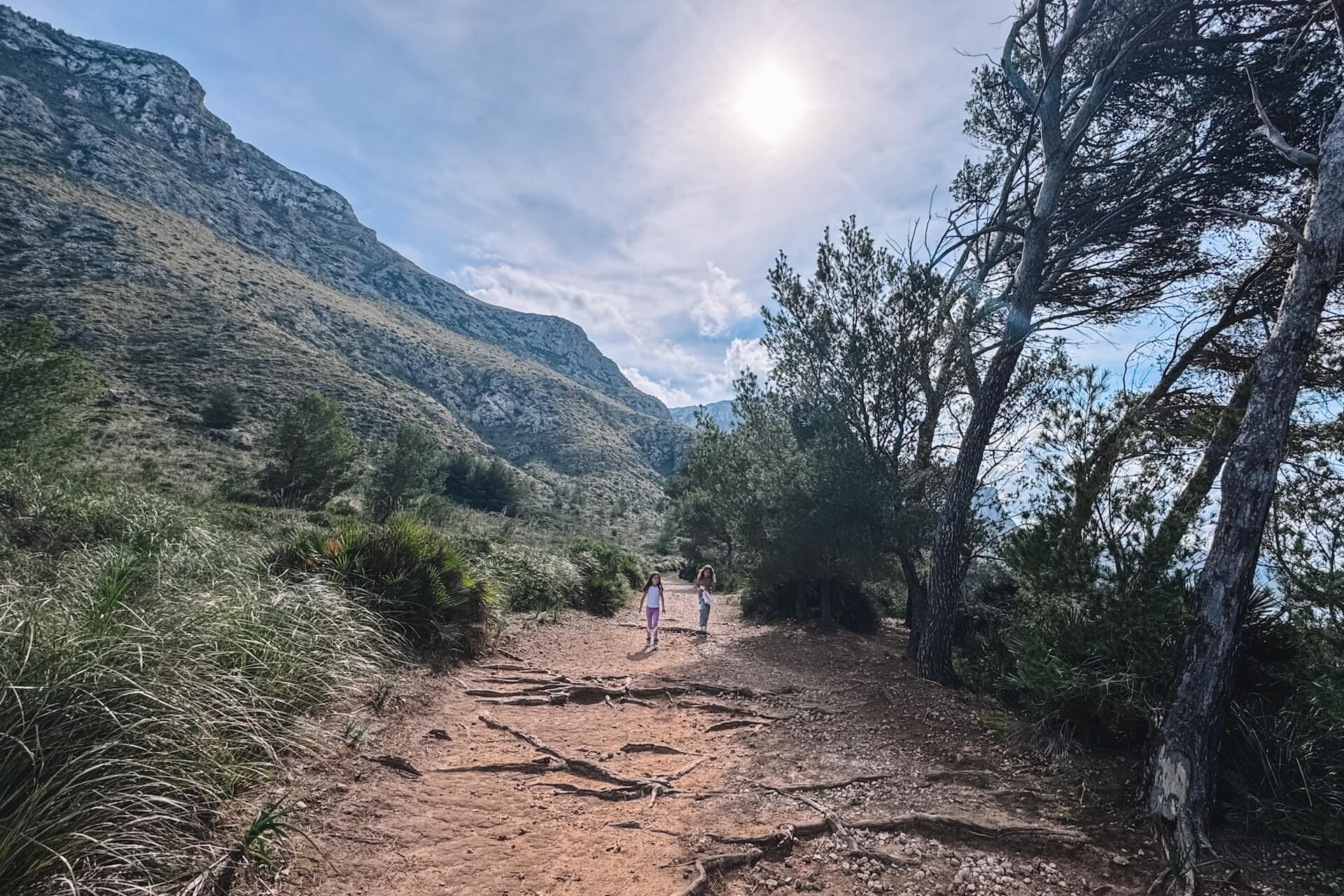
One of the easiest coastal walks on the island, and one of the most scenic. The path follows the coast east from Betlem with the Llevant mountains rising on one side and the Bay of Alcúdia opening out on the other. You’re spoilt for views in either direction.
The route is wide and mostly flat, passing through a little woodland before winding round to Punta d’es Caló, a broad rock plateau with views across the bay towards Alcúdia. On the way back, Cala Na Clara is an easy stop for a swim. After the walk, Restaurant Casablanca in Betlem is well-placed for ice cream and a cold drink.
When to walk: Year-round. Go early in summer, It’s a very popular walk for families at weekends.
Parking: End of Av. de la Mediterrània, Betlem. Spaces near the trailhead are limited. Arrive early.
5.
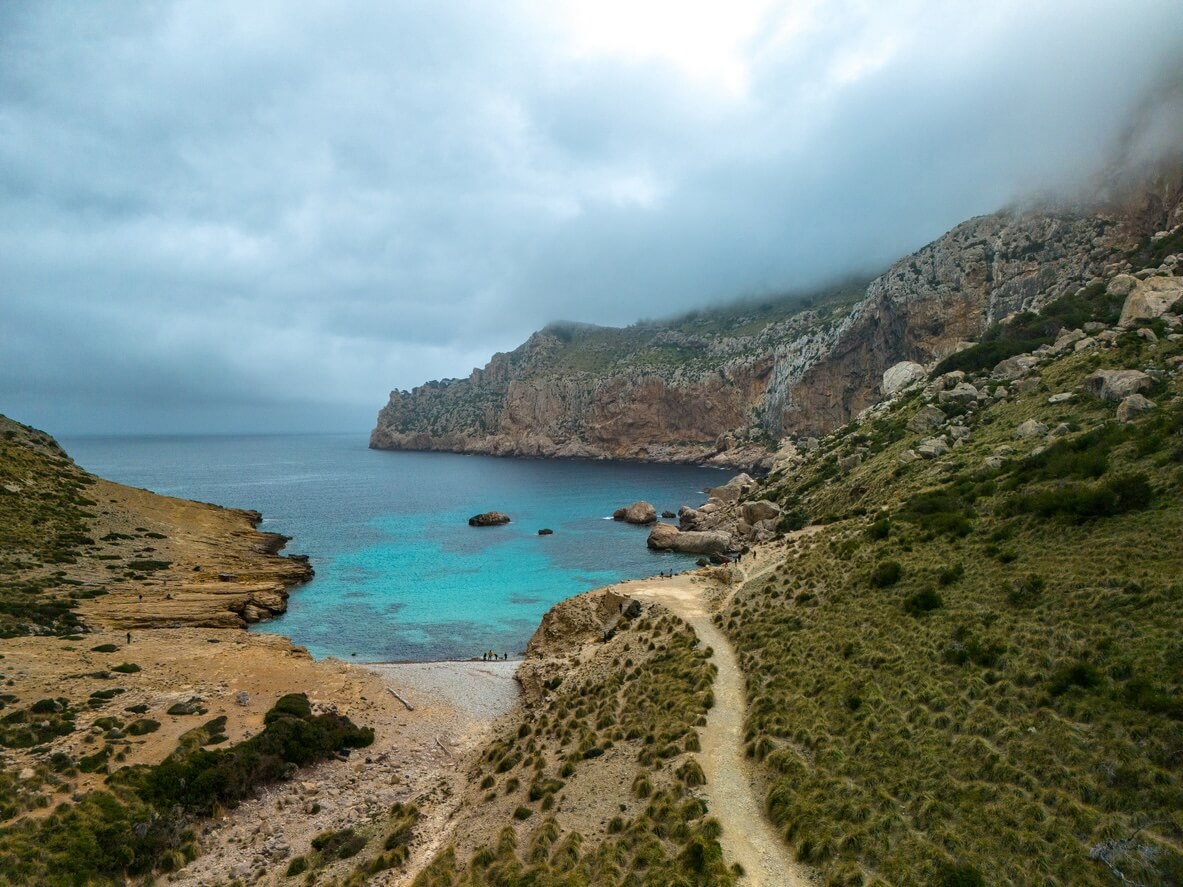
Camí de Cala Bóquer, Port de Pollença
Route Type: Out-and-back valley and coastal path · 5.6km · 2hrs
Difficulty: Easy to moderate · Age 7+ · Not pushchair friendly
Shade: Limited · Swim stop: Cala Bóquer (pebble beach)
The Bóquer Valley is one of the most popular family walks in the north, and it earns it’s reputation. The route follows a track through a wide valley with dramatic mountain walls on both sides, plenty of wild goats, and a clear path towards the sea. The final stretch is more demanding, with a steep and rocky descent to the cove where several paths meet and you find your own way down.
Cala Bóquer is a remote pebbled beach with no facilities and no road access. Bring a picnic, and keep an eye on your bag: the goats are very friendly and may take a fancy to your picnic. Return via the same route.
Note that the path runs through a private estate – remember to close the gates behind you.
When to walk: Year-round. Busy at weekends in spring.
Parking: Bóquer car park, Port de Pollença
6.
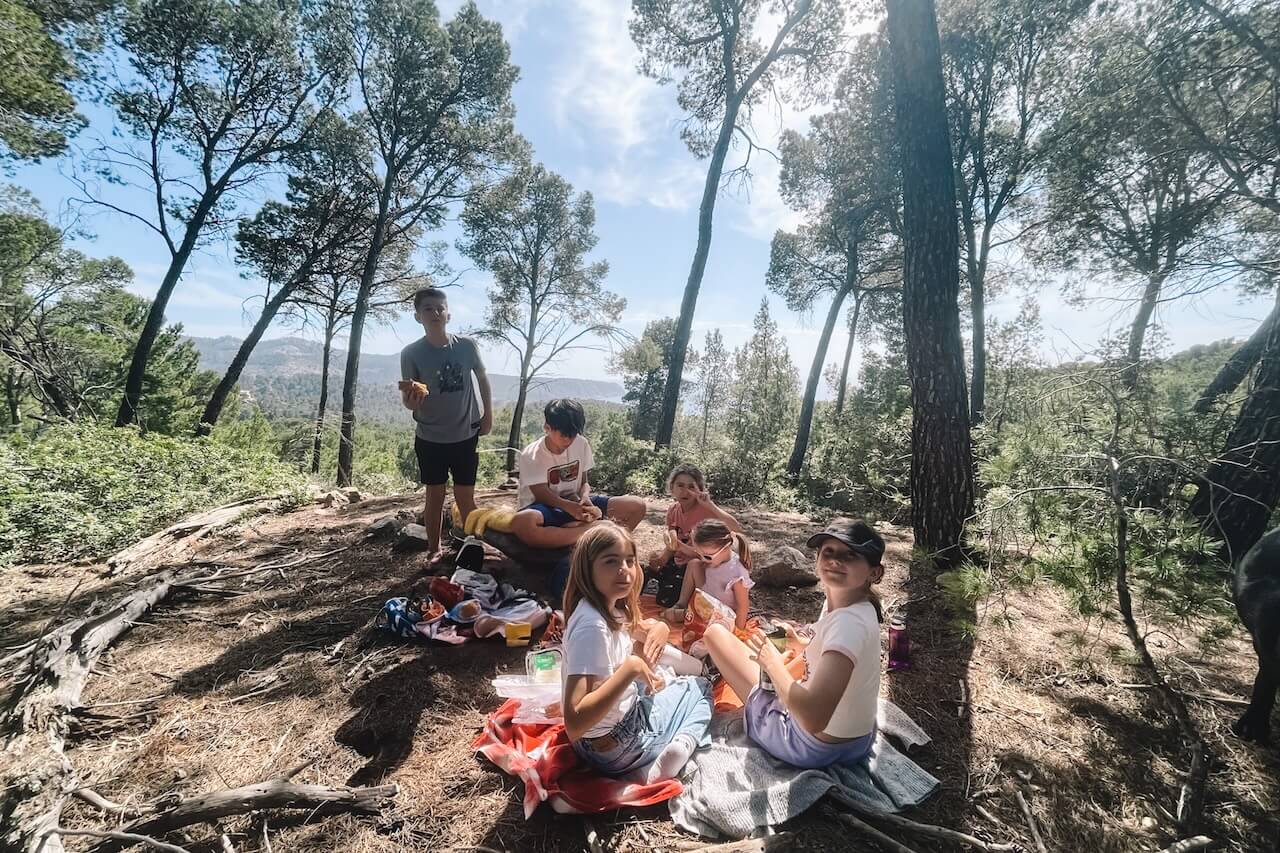
Sant Elm Coastal Loop
Route Type: Circular · 4km, extendable · 1.5hrs+
Difficulty: Moderate · Age 5+ · Not pushchair friendly
Shade: Good on ascent, exposed on descent · Swim in Sant Elm village
A four-kilometre loop above one of southwest Mallorca’s quieter seaside villages, with Sa Dragonera island sitting just offshore for the whole walk. The ascent takes you up through shady pine woodland before opening out onto a ridge with spectacular views and spots for your picnic.
The route is sunny on the seaward side, so if the day is warm, go up through the trees and come down in the sunshine, timing your return for a swim off Sant Elm’s beach. One navigation note: this is a circular route with a fork at the top, that can take you considerably higher onto the hillside onto the well-known La Trapa route – It’s a beautiful path, but a much longer and more demanding one – not ideal for kids.
When to walk: Year-round but avoid mid-summer.
Parking: Dirt road parking at the start of the trail above Sant Elm village
7.
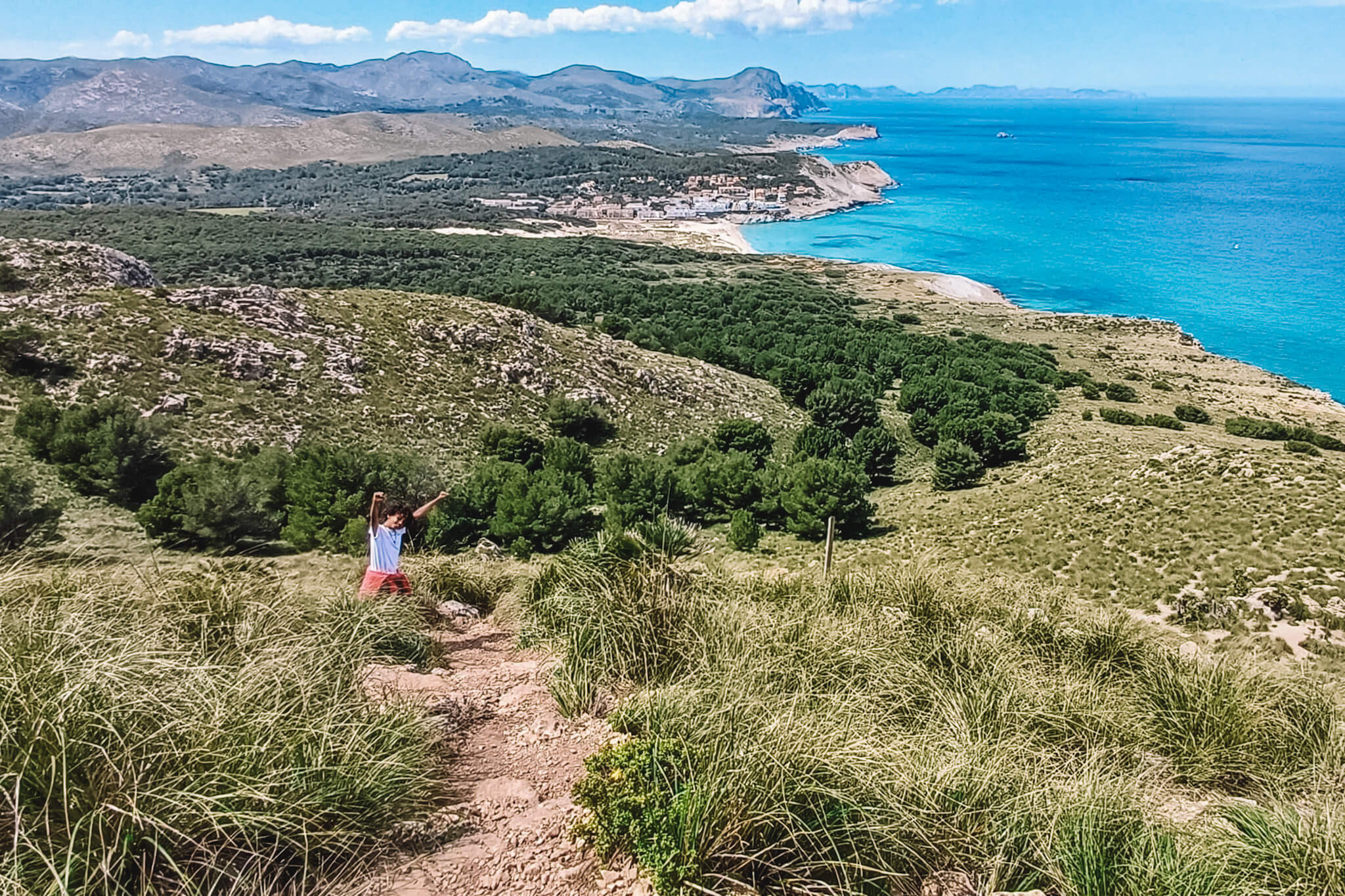
Cala Agulla to Cala Mesquida
Route Type: Point-to-point or woodland loop · 8-9km (full) or 3–4km (woodland option) · 3–4hrs (full) or 1.5hrs (woodland)
Difficulty: Moderate (full) or Easy (woodland) · Age 8+ (full) or Age 4+ (woodland) · Not pushchair friendly
Shade: Good on woodland sections · Swim stop: Both ends
A circular coastal walk linking two of northeast Mallorca’s most beautiful beaches through the Península de Llevant Natural Area. Sea cliffs, shady pine forest, and a sandy bay at either end for a cool-down dip.
The route climbs from Cala Mesquida through low scrub and up above the coast to the Talaia de Son Jaumell, a 16th-century pirate lookout and the high point between the two bays. The views from the top stretch over both beaches and across the Llevant hills. From there the path winds down through pines and open heathland to Cala Moltó and on to Cala Agulla, returning via a flatter, shadier inland forest trail.
For families with younger children, skip the climb and take the forest route out and back. You’ll miss the views but it’s still a good walk, with two wild beaches as bookends. Both beaches have seasonal cafes and beach bars from April to October. From November to March, bring a proper picnic.
When to walk: Spring and autumn. Likely too hot in summer, or head out early and hop in a taxi back to avoid the midday heat.
Parking: Cala Mesquida street parking or Cala Agulla paid car park.
8.
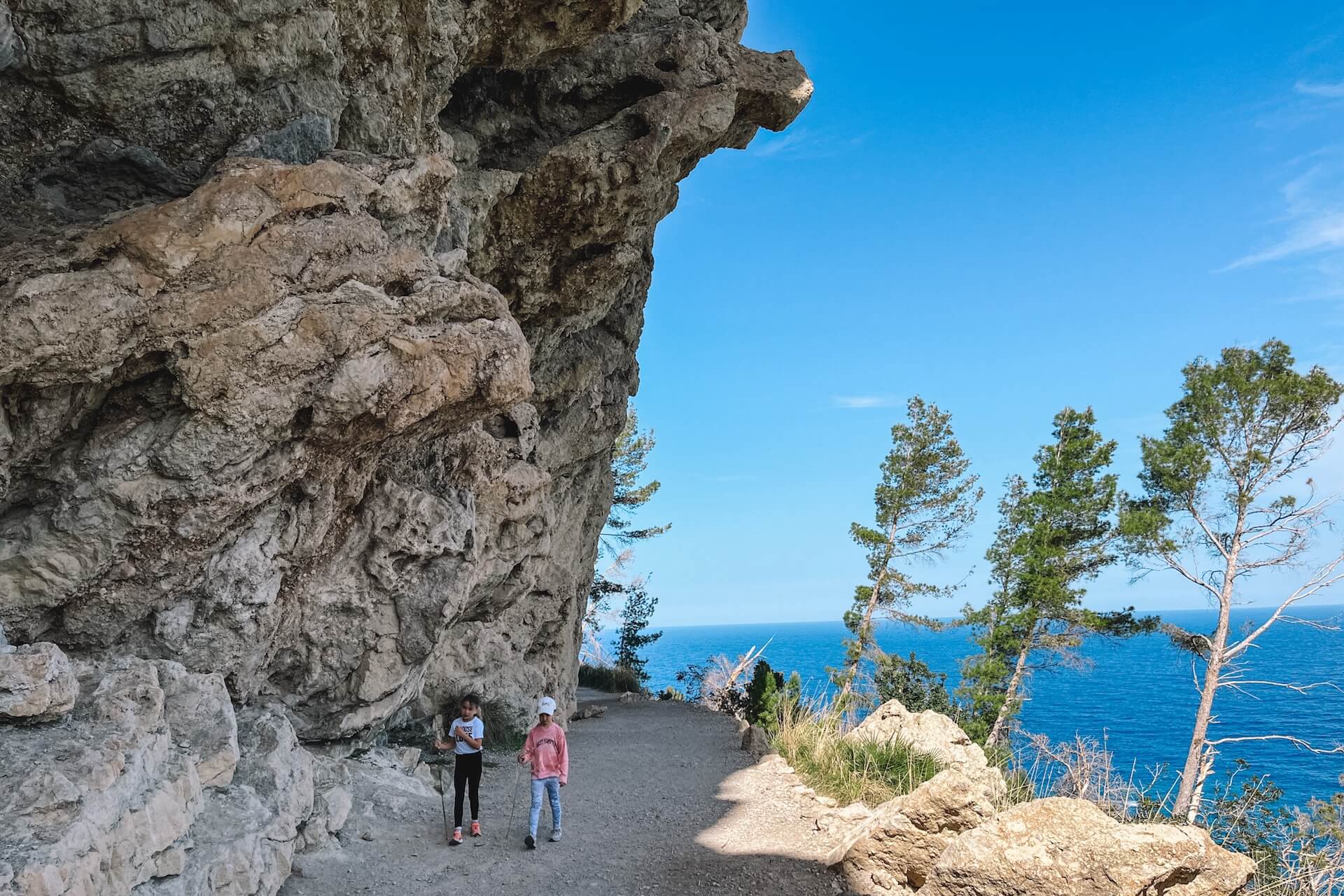
Camí de Sa Volta des General, Banyalbufar to Port des Canonge
Route Type: Out-and-back coastal cliff path · 8.8km · 3hrs
Difficulty: Moderate · Age 7+ · Not pushchair friendly
Shade: limited · Swim stop: Pebble beach at Port des Canonge
Built in the 19th century by General Fernando Cotoner, a Captain General of the Balearic Islands, who had the path constructed along his coastline. This is a well-trodden 9km out-and-back trail starting near Banyalbufar and following the cliffs to the cove at Port des Canonge. With dramatic sea views, steep rocky cliffs above and below, and pine-scented stretches, it’s one of the most striking coastal walks on the island. The path passes the Son Bunyola estate, now a Richard Branson hotel, perched above the coast along the way.
Several sections run close to high cliff edges and require close supervision with young children. Port des Canonge makes a welcome halfway stop, with a pebble beach, two small restaurants and very few other people. Check that one of them will be open at your planned arrival time before you set off. The return is the same route, so pace accordingly.
When to walk: Autumn and spring. Exposed and hot in summer.
Location & Parking: Very small roadside parking area at the trailhead on the Ma-10 hairpin near Banyalbufar. Arrive early as parking is limited. Otherwise you’ll need to drop off and park further along in the village.
More information and other coastal routes →
For more coastal routes with full route notes, maps and practicalities: 10 Top Coastal Walks In Mallorca For Families →
Tramuntana Walks for Families
The Serra de Tramuntana was designated a UNESCO World Heritage Site in 2011, and once you’ve walked through it you’ll understand why. Ancient dry-stone paths, cobbled stone mountain villages, gorges, castles and views that make the climb worth every complaint from the back of the group. Most of these walks are for families with slightly older children who can take on the terrain. Pack a good picnic and plenty of snacks for bribes, or book lunch in a mountain village at the end of your route.
9.
Finca Galatzó, Es Capdellà
Route Type: Out-and-back · Up to 9km, easily shortened · 2–3hrs
Difficulty: Easy to moderate · Age 5+ · Not pushchair friendly
Shade: Good in woodland · No swim stop
A 1,400-hectare public estate on the edge of the Tramuntana, Finca Galatzó has been here since at least 1283 and comes with its own legend. The Comte Mal, the wicked count who once owned it, was said to be so cruel he was condemned to ride these mountains forever on a fire-breathing horse. Worth telling the kids before you set off.
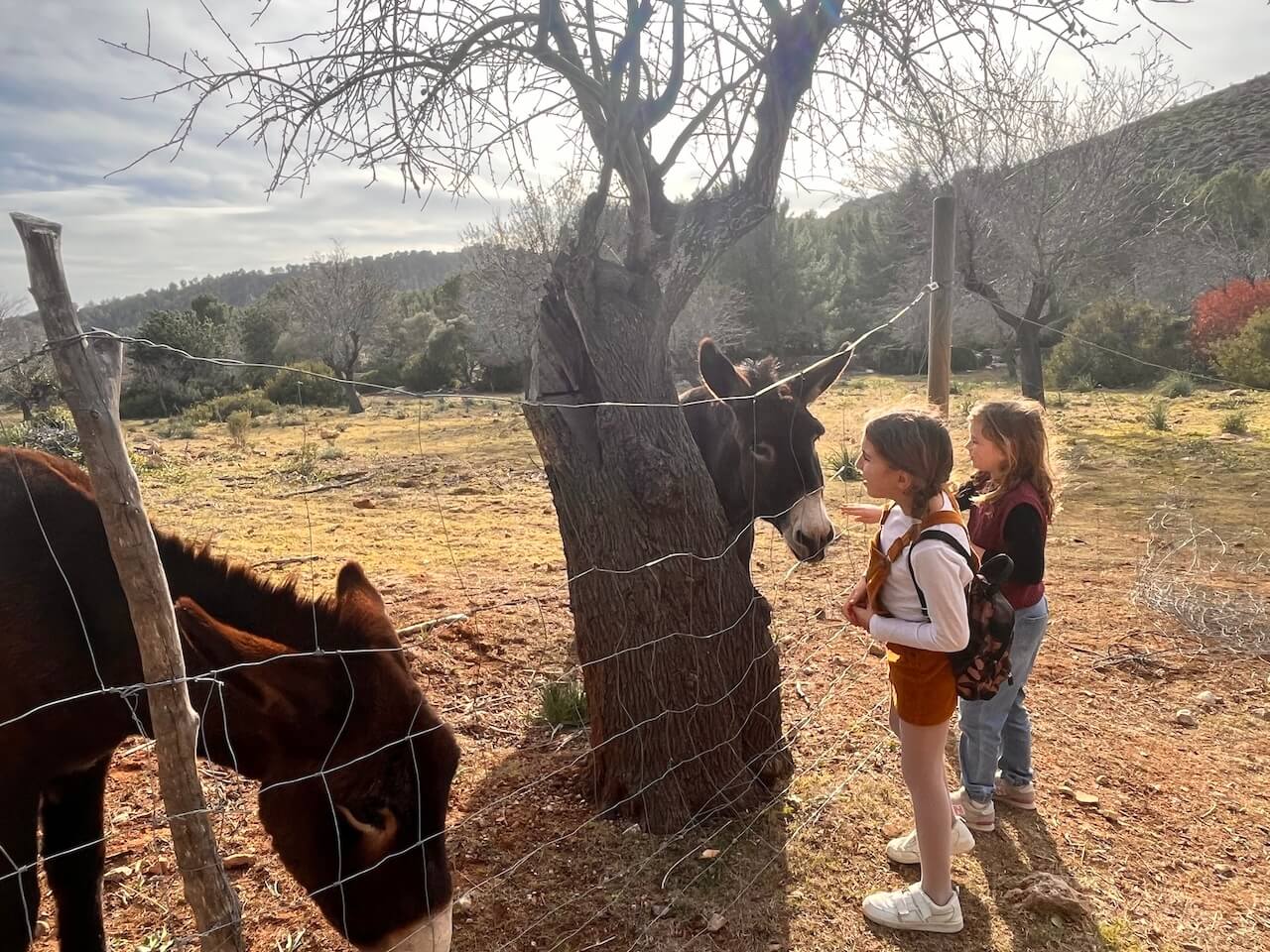
Wide tracks lead from the car park through open countryside to the old estate buildings, then on through Mediterranean woodland and ancient terraces to a viewpoint with big views towards Puig de Galatzó and the valley below. Near the estate buildings there’s usually a donkey or two in the enclosure, which tends to be the highlight for younger children. Turn back whenever the group runs out of enthusiasm.
When to walk: Good year-round. Busy at weekends in spring.
Parking: Free car park at the estate entrance, signposted from Es Capdellà on the Ma-1030. Final stretch unpaved. Arrive before 10h for easier parking.
More information and route options: A Spring Walk at Finca Galatzó and more on route options and official opening hours.
10.

Camí de Sa Figuera (The Pirate Path), Port de Sóller to Sóller
Route Type: One-way · ~5.5km · 2–2.5hrs
Difficulty: Moderate · Age 5+ · Not pushchair friendly
Shade: Good through orange groves · Swim stop at Port de Sóller
In 1561, Saracen corsairs (the pirates) landed at Port de Sóller and attacked the town, an event still remembered and celebrated every year during the annual Es Firó festival.
Begin your walk in Sóller. Head out through the edge of town and the orange groves, ideally after a quick stop at a bakery for supplies. From there the Camí de Sa Figuera follows the old path between Sóller and the port, passing plenty of citrus orchards and terraced hillsides along the valley. The route then climbs gradually onto the hillside before turning towards the sea and descending into Port de Sóller.
This works well as a one-way walk. Once you reach the port, take the vintage tram back to Sóller. The wooden tram has been running since 1912 and travels slowly through the valley and orange groves, a welcome lazy return.
When to walk: Year round. Spring and autumn are particularly good.
Parking: Start in Sóller town centre. Paid parking in public car parks in town or along the main road to the port. Return from Port de Sóller on the vintage tram.
11.
Barranc de Biniaraix, Sóller
Route Type: Out-and-back through gorge · Up to 6km · 1.5–2.5hrs
Difficulty: Moderate, steady climb · Age 7+ · Not pushchair friendly
Shade: Good in gorge · No swim stop
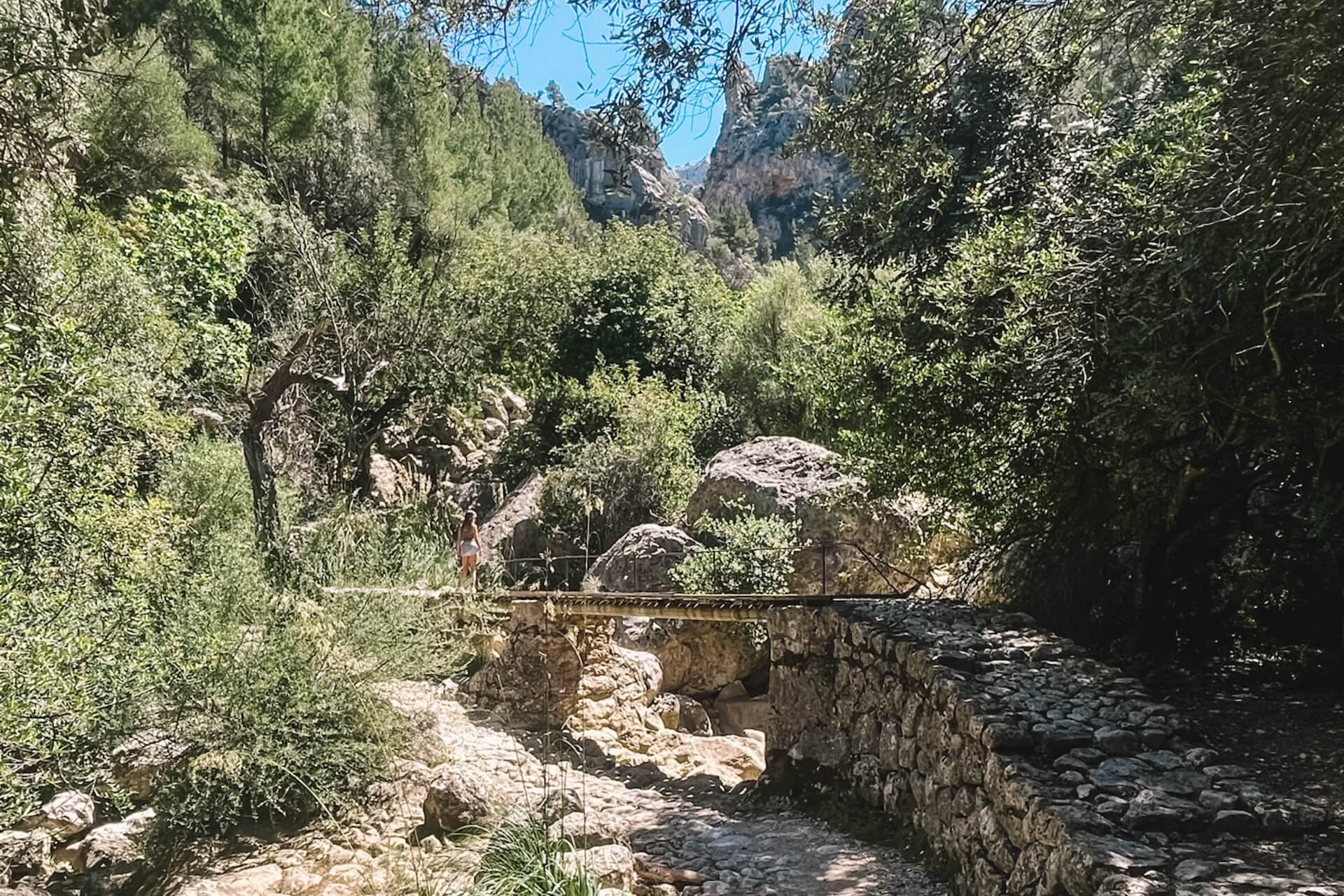
This beautiful cobbled hike begins on the outskirts of Sóller and heads to Biniaraix, then uphill through the Barranc de Biniaraix – a stone-stepped gorge winding up into the Tramuntana. After an easy slightly uphill stroll out of Sóller to the village, the route from Biniaraix climbs steadily up through groves and rocky slopes. Occasionally, after heavy rainfall, icy springs fill the gorge, but when the gorge is dry, the big rocks are just as fun to climb.
It’s part of the GR221 Dry Stone Route, so you can walk as far as you can convince the kids and turn back whenever. On the way back, stop at Bar Bodega Biniaraix in the village square – you’ll need a booking much of the year. Especially on Sundays for Tommy’s Pizza.
When to walk: Autumn and spring. Avoid in summer heat.
Parking: Park in Sóller near the Institut Guillem Colom on the edge of town and walk out to Biniaraix (it closes to non-resident parking for much of the year). Note that parking restrictions in Sóller may be subject to change.
12.
Castell d’Alaró, Alaró
Route Type: Partial loop · 5.6km · 2.5hrs
Difficulty: Moderate · Age 7-8+ · Not pushchair friendly
Shade: Moderate · No swim stop
Perched on the clifftop for over 1,000 years, Castell d’Alaró was built by the Moors and later taken over by Jaume I in 1231 after a two-year siege. The ruins are mostly rubble but dramatic with it, and the views across the Tramuntana are spectacular.
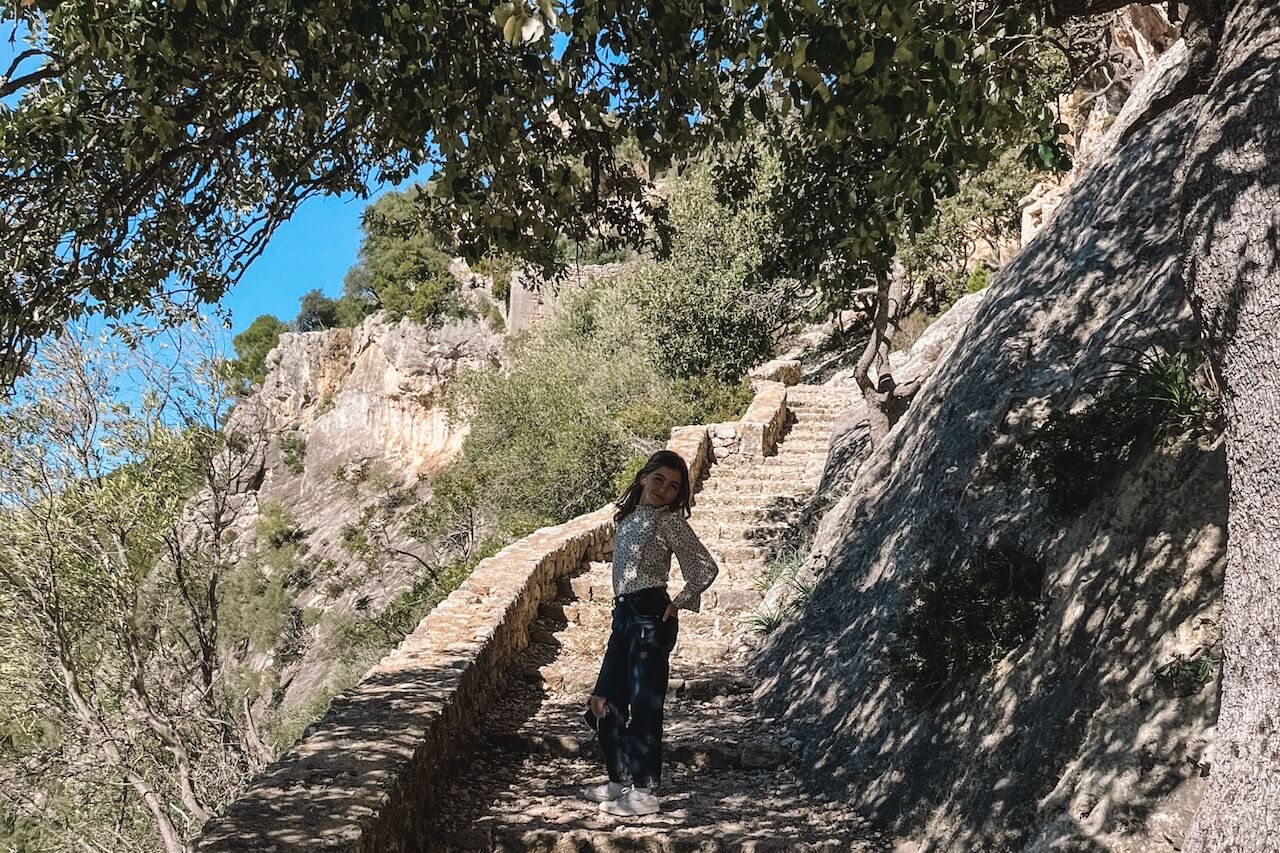
The path winds up mountain paths and wide steps before emerging through an ancient stone gate onto the summit plateau. It’s a manageable climb with some serious drops at the top, so save this one for older children who can be trusted near an edge. The return loop is partially forested and shady, a welcome easy return in time for a lamb lunch at the restaurant where you parked.
When to walk: Autumn through spring. Makes for an ideal winter walk with lunch.
Parking: Park at Es Verger restaurant and walk from there, or park roadside at the bottom of the hill for a longer route. The road up to Es Verger is narrow, potholed and not for the faint-hearted in a hire car. Go slowly and be prepared to reverse for oncoming traffic.
Walking in Mallorca by Season
Spring, March to May
Peak walking season. The Tramuntana is at its greenest, the Barranc de Biniaraix gorge is at its best, and wildflowers line most paths. From April, temperatures are often warm enough to say yes to a swim at the end, or at least an accidental big splash, making it a great time to try out the coastal routes. Kids will enjoy flamingo spotting at S’Albufera during migration season, ideal for cycling days out too.
Village cafes start reopening from March, with most beach restaurants back open by April, so you can start planning the post-walk lunch again. Book early around Easter.
Summer, June to August
Possible, but only if you are up and on the trail by 8h before the heat builds. Coastal walks to swimming bays are the only practical choice: the kids can cool off at either end while you catch your breath. Betlem and Punta de n’Amer at Cala Millor are both manageable early in the day. S’Albufera works in any season since it’s flat and partly shaded. Everything else is better left until September.
Autumn, September to November
Much like spring but with warmer seas and fewer flowers. September and October are excellent for all the same routes, with the added bonus that the water is actually warm enough for a proper swim minus the sharp intake of breath. Most beach restaurants are still open through October, though they close from the 1st of November, so plan accordingly. November can still surprise you with a good walking day, and on the right sunny afternoon someone will always brave a last dip of the year. Pack a picnic from November onwards just in case.

Winter, December to February
Better than you’d think. The island is quiet and the temperatures are usually pretty perfect for walking. Ses Fonts Ufanes is at its best after autumn rain, with the springs often in full flow through December and January, and children who find birdwatching a stretch will find jumping over woodland streams more than enough to keep them busy. Castell d’Alaró is excellent on a cold clear day, with the whole plain spread out below and lamb at Es Verger afterwards. The Pirate Path between Sóller and the port is sheltered and with lunch in Soller, makes for a great day out year round – though note the tram closes for maintenance for a couple of weeks in January, check before you go. Finca Galatzó‘s almond blossom starts in late January and peaks through February.
Bear in mind that beach cafes and many coastal restaurants close from early November, and some village cafes follow. If you’re not sure what’s open at either end of a walk, pack a picnic.
Things to Know Before You Go
Footwear matters. Mallorcan paths are rockier and more uneven than most families expect. Trainers with good grip are fine for most routes. Check your children’s feet before you leave the hotel or home – flips flops have been known to make an unwelcome appearance once all parked up at the trail-head.
Pack smart. More water than you think you need, especially in warmer months (1 litre+ per person), and plenty of snacks, especially if hiking in the winter months when many smaller cafes close for a holiday. A well-hidden bag of jellybeans for the final stretch has also been known to work wonders on the final stretch. Don’t forget hats, high factor suncream and the odd change of clothes comes in handy for those unexpected sea dips.
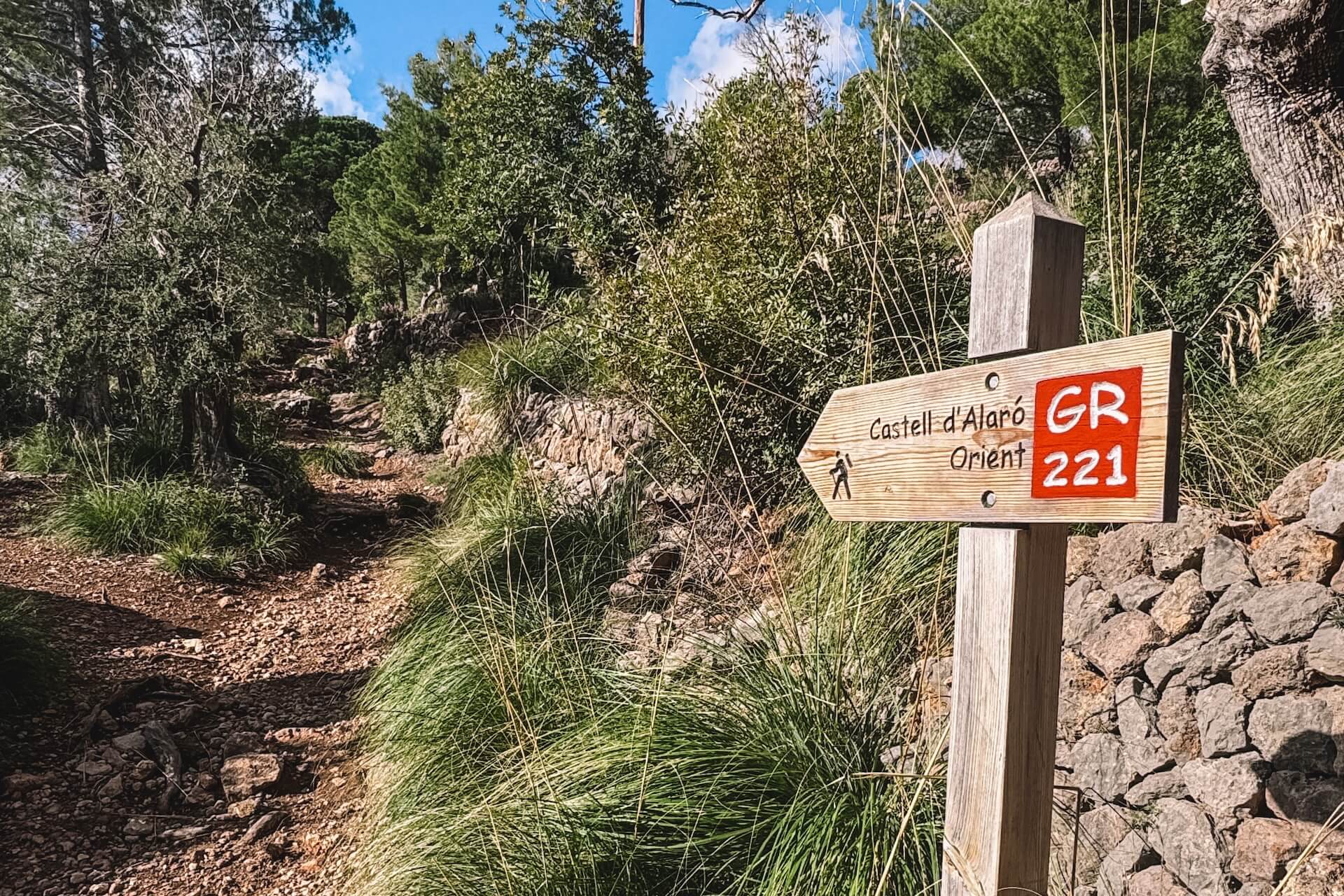
Download a route before you go. Most routes in this guide use sporadic wooden board waymarkers or paint dots rather than clear signage. Komoot and AllTrails both have reliable tracks for the routes listed here. Don’t rely on phone signal in the Tramuntana.
Safety first: Several walks in this guide, particularly the coastal cliff paths and the higher Tramuntana routes, involve exposed sections, cliff edges and significant drops. These paths are perfectly walkable for children who are sure-footed and easily supervised, but they’re not suitable for very young children or those who can’t be relied upon to stay on the path. If in any doubt, stick to those listed as ‘Easy Walks and Nature Trails’ and always check the weather before leaving, conditions can change quickly in the mountains.
Frequently Asked Questions
Are there pushchair-friendly walks in Mallorca?
Lots, though most of the hikes in this guide aren’t among them. Hiking routes in Mallorca tend to be mountainous or across rocky, uneven terrain, so a carrier backpack is usually the better call. Of the routes here, three work with a decent off-road pushchair: S’Albufera Natural Park, Ses Fonts Ufanes on a dry day, and Betlem’s coastal path. For flat, paved pushchair walks you’ve got some great options elsewhere on the island. The promenade from Palma to Arenal is an easy one, as is the three-beach coastal path at Palmanova and long promenade connecting Cala Bona to Cala Millor, and even beyond to Sa Coma. The Bay of Pollença seafront and Port de Sóller‘s harbour are also ideal spots for flat strolls with pushchairs, scooters and skates.
What is the best walk in Mallorca for families with toddlers or young children?
For toddlers and under-fives, S’Albufera and Ses Fonts Ufanes are the strongest options: flat, short and with enough to look at along the way. Finca Galatzó is good when they’re ready for something a little more adventurous without it being a serious hike. When they’re ready to go further but you still want to keep it straightforward, Betlem’s coastal path and the forest route between Cala Agulla and Cala Mesquida are both good next steps.
Which are the best walks in Mallorca in winter?
Winter is a good season for lower-elevation walks. Ses Fonts Ufanes is at its most impressive after autumn rain, typically November through January. A walk at Finca Galatzó is especially lovely late January through February, when the almond blossom blooms. Castell d’Alaró is manageable year-round, but best saved for clear winter days. Avoid high Tramuntana routes after heavy rainfall and check conditions before heading to the mountains.
Can you walk in the Tramuntana with kids?
Yes, absolutely, but pick your route carefully. The Tramuntana has some well-known paths with serious drop-offs and challenging conditions that aren’t right for children, it’s worth doing your research before you head out. Of the routes in this guide, the Pirate Path between Sóller and the port and Finca Galatzó are both manageable from around age five with some walking experience. Barranc de Biniaraix and Castell d’Alaró are better suited to age seven or eight and above. Good footwear is non-negotiable on all Tramuntana routes, and always check the weather before you go: conditions change quickly in the mountains.
Can you camp overnight on hiking trails in Mallorca?
Wild camping isn’t permitted. There are a small number of official designated camping zones on the island, though facilities are basic. The better option for families who want a proper overnight adventure in the mountains is the refugi network: simple mountain shelters dotted along the Tramuntana trails, with bunk beds, some with dinner and breakfast included too.
Explore our overnight adventures here Overnight at Refugi Tossals Verds → and here Overnight at Refugi de s’Arenalet →
Trail conditions can change. All information shared is for general information only, not technical or professional guidance. Children’s safety and route suitability are always the responsibility of the parent or carer and will vary by child. Always check the weather and choose a route suited to your children on the day.