Updated May 2026
Mallorca is bigger than it looks on a map, and getting around with kids in tow takes a bit of planning. The good news: the island has a well-connected public transport network covering most of the places families want to go, and for everything else there’s car hire, taxis and private transfers. Here’s what you need to know.
Top Tips
- Book rental cars – and child seats – well in advance. Supply is limited in peak season, and ‘in terminal’ collection is strongly advised.
- Don’t rely on airport taxis for car seats. Book a private transfer if you need a seat confirmed in advance. And families of five or more are best to book a private transfer.
- Don’t drive into Palma old town. Park in the underground car parks on the Avenidas, Parc de la Mar, Sa Feixina or El Born and walk in.
- Pay by contactless card on buses. It works on both EMT and TIB networks and is 40% cheaper than cash. One card covers up to five people on TIB.
- Buses get busy in peak season. On popular routes in July and August you may need to wait for the next one, same goes for rainy days. Factor this in if you’re travelling with young children in the heat.
- Plan longer drives around nap time. Most key drives on the island – Palma to Alcúdia, Alcúdia to Sóller – fit neatly into a standard toddler nap.
Arriving at Palma Airport
Palma airport is straightforward once you know your options. A new central bus station opened in August 2025, bringing all the bus stops together in one place – easier to find with a pushchair and a trolley full of luggage than the old setup.
Taxi: Head to the taxi rank outside arrivals for a metered taxi – there’s usually plenty and no negotiation is needed; the meter runs from the moment you get in. Almost all taxis take a maximum of four passengers; if there are five of you, you’ll need two taxis or a pre-booked 7-seater transfer. For the short drive into central Palma, children may legally travel without a car seat – the urban area exemption applies. For longer transfers to resort areas involving the motorway, a correctly fitted seat is required. Book a private transfer if you need one confirmed in advance, or travel with your own EU-approved car seat.
Read our full guide to child car seat rules in Spain →
EMT city bus (A1): Runs to central Palma. A2 to Arenal. Pay by contactless card on board – it’s cheaper than cash and faster. See fares below.
TIB island bus (AeroTIB): Covers routes from the airport towards Alcúdia/Can Picafort, Cala Bona/Cala Millor, Campos and Palmanova/Camp de Mar. Contactless payment on board.
Private transfer: Pre-arrange everything – the car, the seat, the convenience is often worth it with kids-in-tow. See our recommendations below.
Car hire: All the major companies are at the airport. Book child seats well ahead – in peak summer the wait at popular rental desk lines can be long and hot – some of them after a transfer and with little shade (yes, really). In-terminal collection is worth the extra cost with children in tow.
Car Hire
For most families, a hire car is the most practical way to get around – particularly outside the main resort areas. Public transport covers the main towns and beaches well, but flexibility with a pushchair, multiple bags and children on their own schedule is hard to replicate on a bus.
A few things worth knowing before you collect:
- Book your child seat in advance and confirm it at collection. In peak season supply runs short. Check the seat’s condition before you drive away – ask for a replacement if it looks worn or the harness is frayed.
- The northwest mountain roads (Serra de Tramuntana) are winding and narrow. Perfectly driveable but worth knowing for families with car-sick children.
- Palma city centre has limited parking and narrow streets. Park on the main roads surrounding the old town and walk in.
- Full insurance cover with excess waiver included is worth having with children in the car.
Driving and Parking in Mallorca
Palma Old Town: Don’t Drive In
Palma old town is not somewhere to take a hire car. Two overlapping restrictions catch tourists out regularly, and the fines are real and the rental agency will likely track you down later.
ACIRE zones (Areas of Restricted Circulation) cover the historic centre streets and are reserved for residents with a permit, public transport and authorised deliveries. Cameras monitor entry points and non-residents face a €200 fine. The streets are also extremely narrow, frequently one-way and not designed for anything larger than a small local car – getting in is one thing, getting out is another.
Low Emission Zone (ZBE) – from July 2025 Palma‘s low emission zone is fully enforced with cameras and €200 fines. It broadly covers the area within the main Avenidas around the old town. Most modern hire cars are compliant, but check your vehicle’s environmental rating before entering if you’re unsure.
Park in the underground car parks on the main roads surrounding the old town – the Avenidas, Parc de la Mar, Sa Feixina or El Born – and walk in. Quicker, cheaper and considerably less stressful.
Parking Lines: What the Colours Mean
- Blue lines – paid parking (ORA zones). Buy a ticket from the nearest meter and display it on the dashboard. Time limits apply, typically one to two hours. Common in town centres and resort areas.
- Yellow solid lines – no parking at any time.
- Yellow broken lines along the kerb – loading and unloading zone. Time-restricted – check the sign nearby for permitted hours. Outside those hours they’re often free to park.
- Red and white striped kerb or zigzag lines – no stopping at any time. Usually outside schools, bus stops and emergency access points.
- Disabled bays – marked with a blue wheelchair symbol on the ground. €200 fine for parking without a valid disabled badge displayed.
- White lines or no lines – free parking, no time limit unless signs say otherwise. Always check the nearest lamppost or wall for signs before walking away.
And a few other things worth knowing:
- ACIRE zones exist elsewhere on the island – avoid, they are for residents-only. ]
- Parking at the beaches in summer is challenging after 10h. Always aim to arrive early with children. the same goes for mountain towns – especially Sóller, Valldemossa, Deià and others. We strongly advise very early arrival to find parking.
- Some beaches – Formentor, Cala Deià close their access roads to the public once the parking is full. Generally from mid-May, you’ll find no access options after 11h (or earlier).
Child Car Seat Rules in Spain
Worth reading before you plan to get around by hire car, private transfer or taxi.
The rule: All children under 135cm must use an approved child restraint system in all vehicles – rental cars, private cars and private hire vehicles. The rule is based on height, not age. A 12 year old under 135cm still needs a car seat. Over 135cm, a standard adult seatbelt is fine.
In rental cars: Book a seat in advance – supply runs short in peak season. Check the condition before driving away. Fines for non-compliance are €200. i-Size (R129) is now the recommended standard; older R44 seats are still legal but new ones are no longer sold in Spain.
In taxis: Within urban areas, children may legally travel without a car seat – taxis are exempt from the standard rules for short city journeys. The standard seatbelt should be used. For any journey involving a motorway or intercity road, the same rules apply as in a private car. This is a legal exemption, not a safety recommendation – with a baby or young toddler, a private transfer with a pre-fitted seat is the safer call.
Uber and private hire apps: The taxi urban exemption does not apply. A car seat is required.
Front seat: Children under 135cm must sit in the rear unless all rear seats are occupied by other children in car seats. If a rear-facing seat goes in the front, the passenger airbag must be deactivated.
For full detail: N332 child seat guide

Public Transport
Most bus, metro and train services run from Estació Intermodal at Plaça d’Espanya in Palma. This central underground interchange has a ticket office, toilets, luggage storage, cafés and a supermarket. There’s a train-themed playground just around the corner at Parc de Ses Estacions – worth knowing if you’re killing time with restless children between connections.
Buses
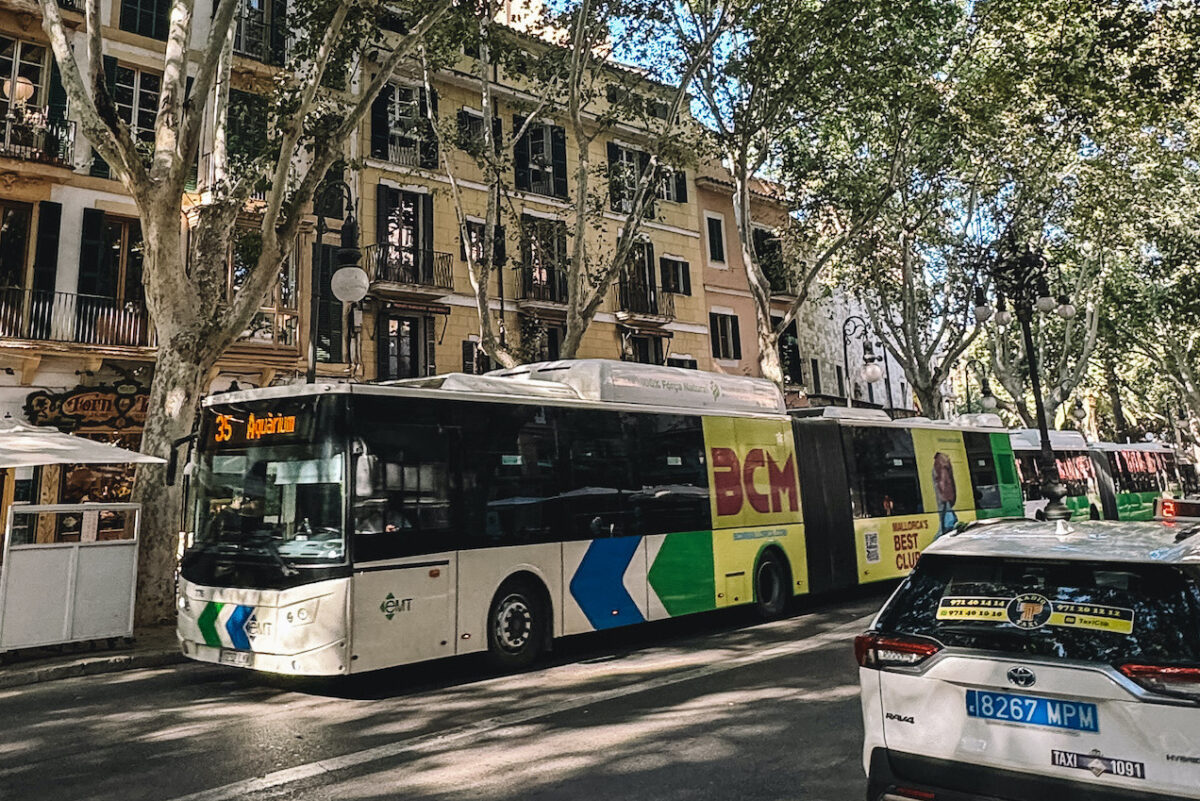
Two networks cover the island. The blue, white and green EMT buses serve Palma city and neighbouring areas. The red and yellow TIB buses connect Palma with the rest of the island.
Pay by contactless card on both networks – it’s 40% cheaper than cash. Tap your card when boarding. One card covers up to five people on TIB. On TIB tap off when you leave too; on EMT no tap off is needed.
Cash is still accepted but costs more. Notes over €10 refused on EMT; over €20 on TIB.
EMT Buses (Palma)
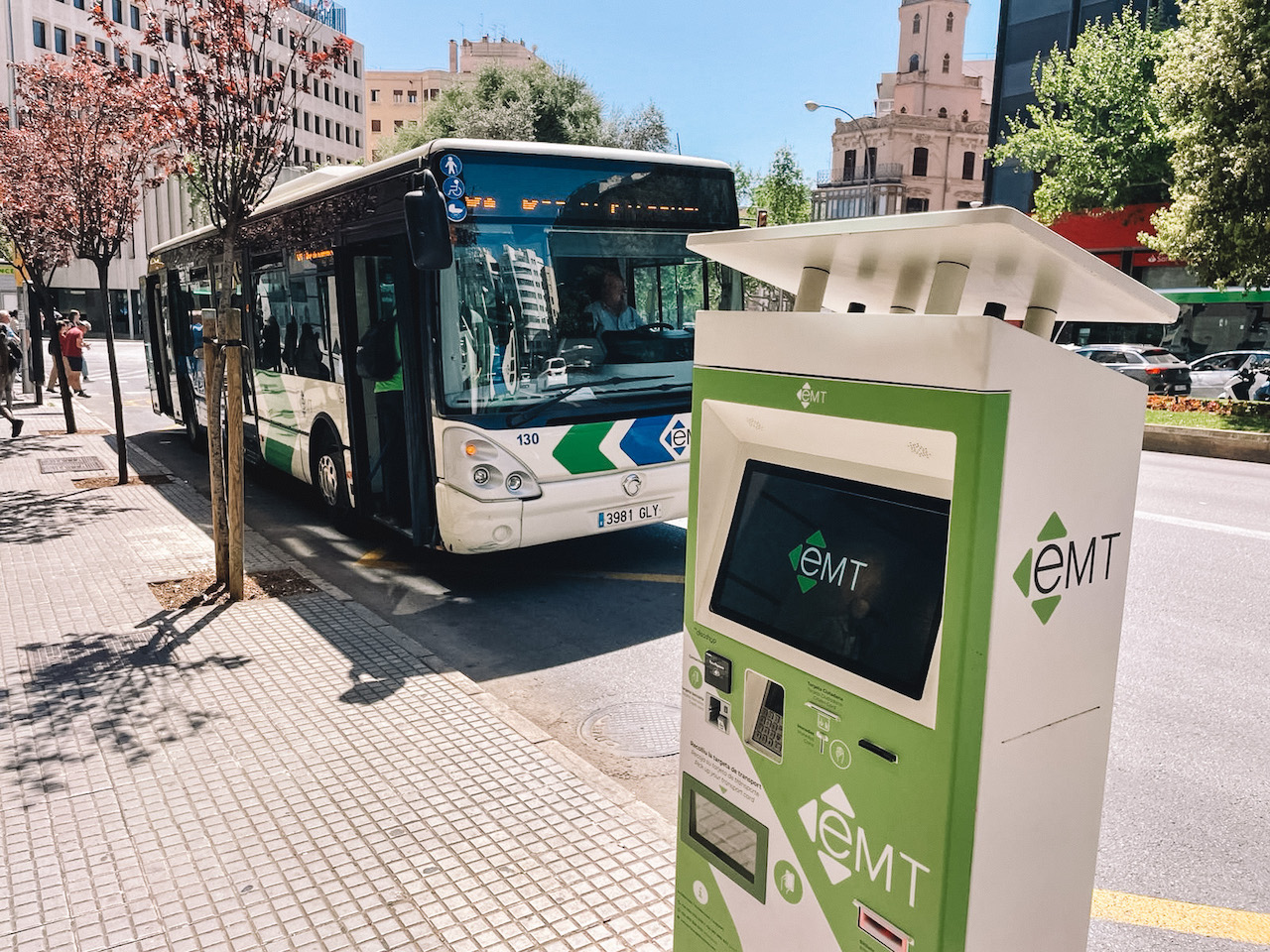
The blue, white and green EMT buses serve Palma city and neighbouring towns, most stopping at Estació Intermodal. Two lines also run from the airport.
- Fares: Single cash fare €2, €3 to the port, €5 to the airport. Card is 40% cheaper. A ten-journey prepaid card (€10) is available at recharge machines at stops and stations, ticket offices and some news kiosks.
- Children: Under fives travel free with a ticketed adult.
- Pushchairs: Use the middle door and park in the designated area if you have a pushchair. No need to fold on EMT city buses.
- More info: EMT Palma

TIB Buses (Island-wide)
Departing from the central bus station at Plaça d’Espanya, TIB covers six regions with lines 100, 200, 300, 400, 500 and A (Airport). The fleet has been upgraded in recent years – newer buses have low-floor access, ramps, pushchair and wheelchair spaces, USB charging points and onboard screens. That said, it’s still a mixed fleet and you. never quite know what will turn up! On longer cross-island routes expect older coach-style vehicles – comfortable with air con and luggage storage, perhaps not as polished as the newer models.
- Fares: Tap on and off with a contactless card – the cheapest option. Cash accepted up to €20 notes.
- Children: Under fours travel free
- Pushchairs: On longer cross-island routes the pushchair goes in the hold – ask the driver to open it before you board. Local TIB routes have more space and often allow pushchairs onboard unfolded. Either way, be prepared to wake a sleeping child.
- Summer: Popular routes fill up fast in July and August – you may need to wait for the next one.
- More info: TIB

TIB single cash on-board fares 2026
Train & Metro (TIB)
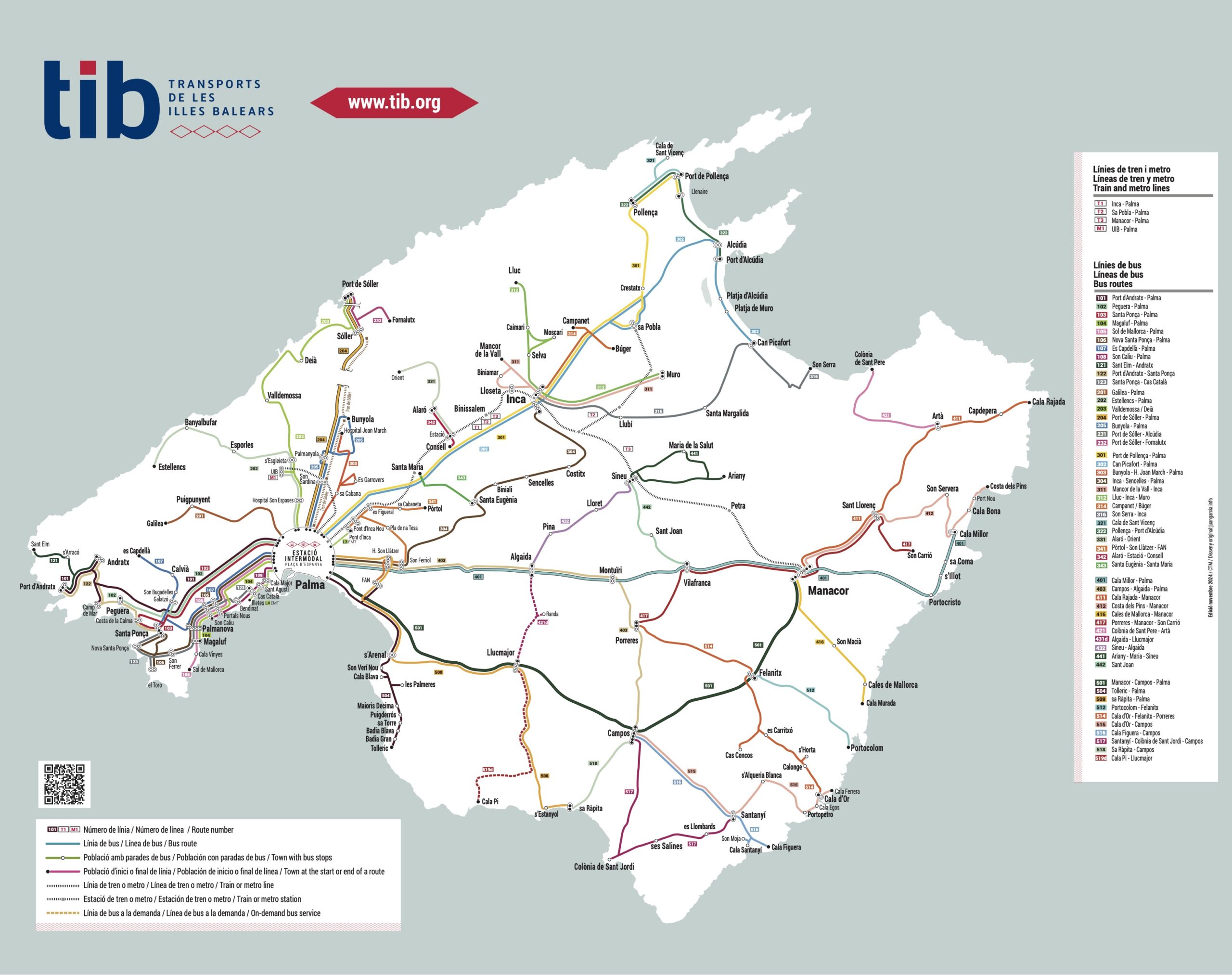
From Estació Intermodal, trains run to Inca (T1), Sa Pobla (T2) and Manacor (T3) with 22 stops along the way. All main stations are accessible for pushchairs and wheelchairs. Tickets by card or cash at station machines.
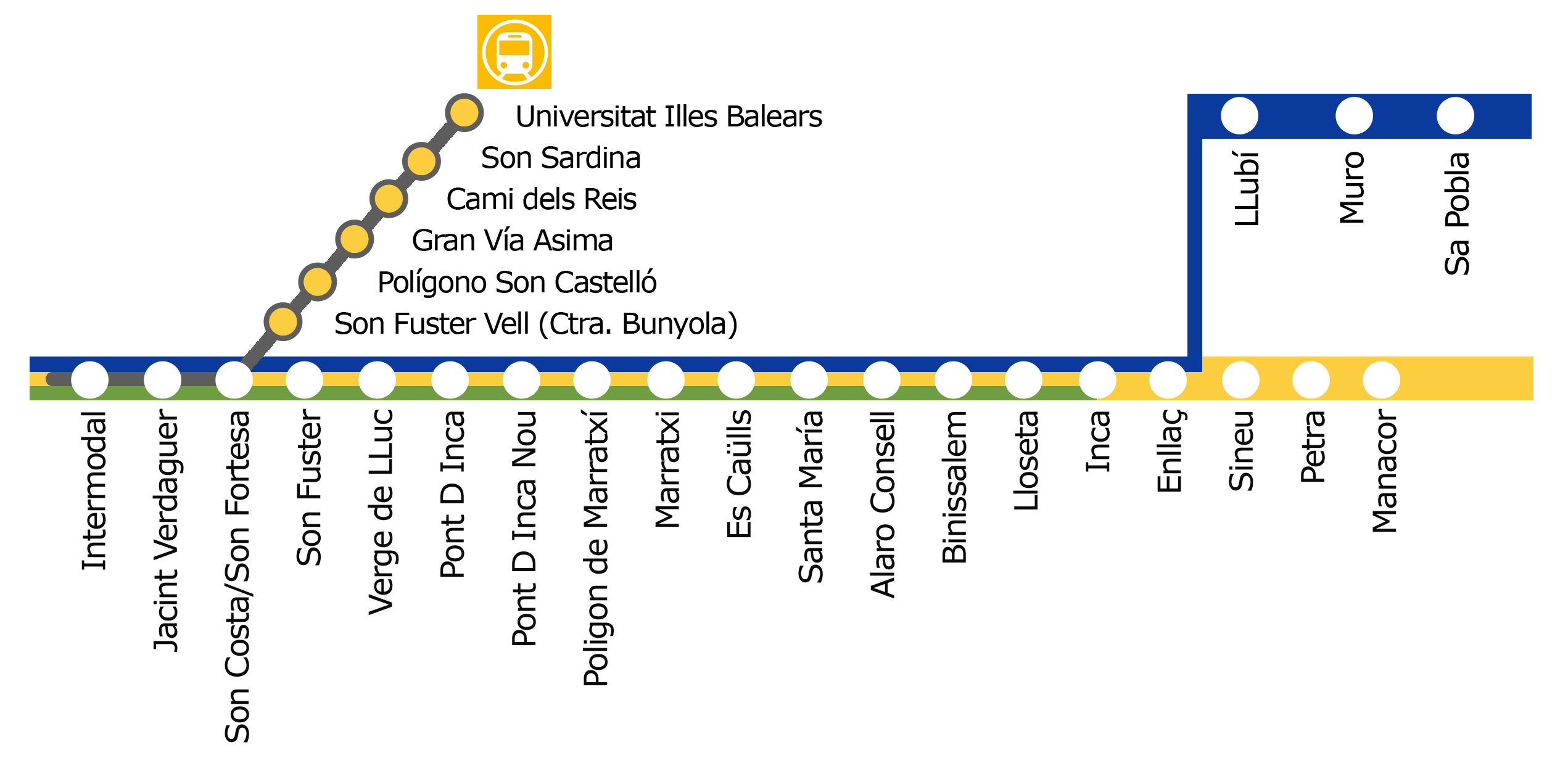
Palma‘s M1 metro line connects Plaça d’Espanya with the University (UIB) and Parc BIT. Stations have lifts and ramps. Pushchairs on board without folding. Tickets by card or cash at station machines.
TIB for routes and fares.
Tren de Sóller
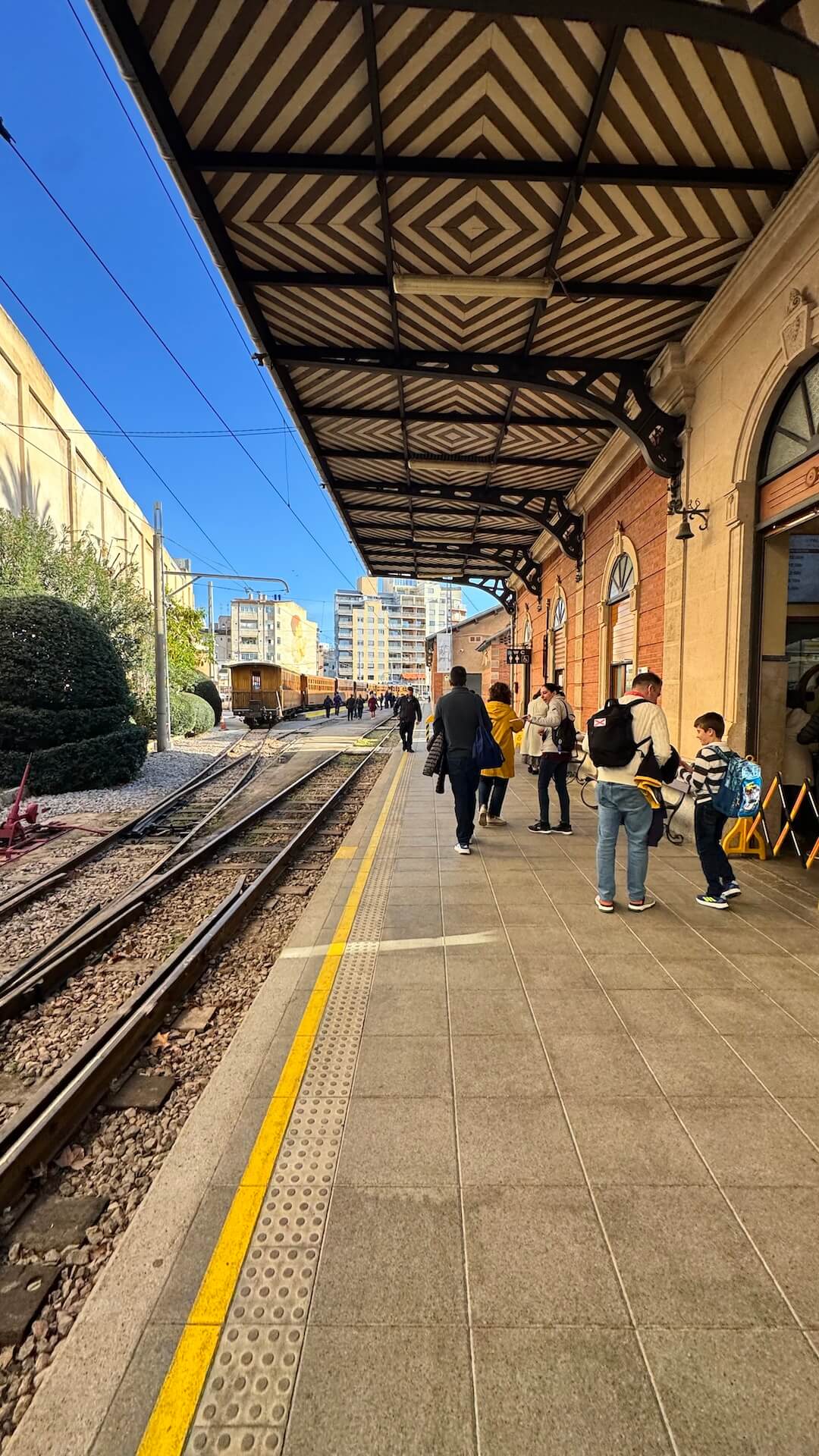
The vintage wooden train from Palma’s Sóller station to Sóller is privately operated and not part of the TIB network. It runs through mountain tunnels and citrus groves – around an hour each way – and most children find it genuinely exciting. At Sóller, the heritage tram runs down to Port de Sóller for lunch and a swim. A good full-day out, worth planning around nap time with young children.
Read our full guide to the Tren de Sóller with kids →
Cycling
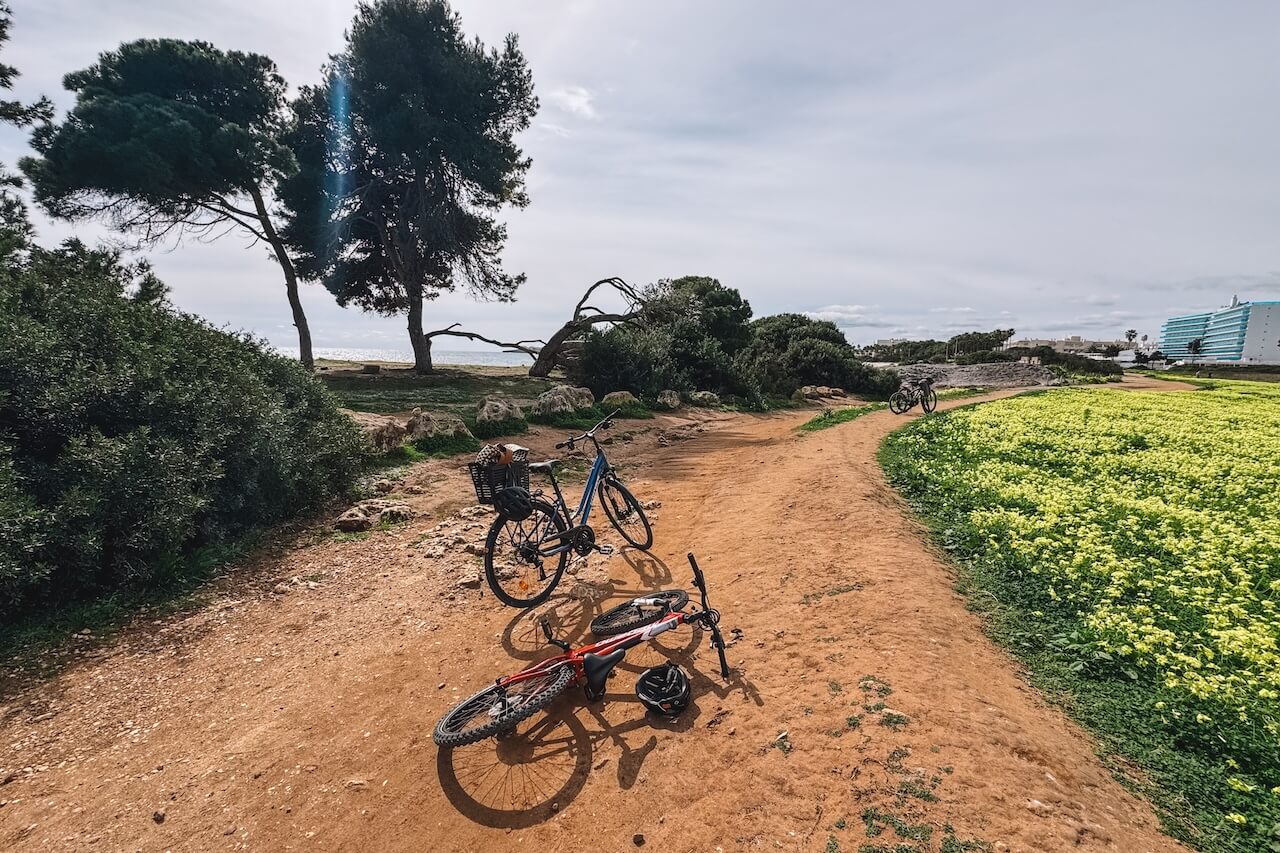
A couple of spots on the island are flat and cycle friendly enough that families can use bicycles to get around;
- Palma seafront – the cycle path along the Paseo Marítimo runs from the Marina past the old town out to Portixol and beyond to Arenal. Flat, well-maintained and handy for families staying central who want to get around without a car.
- Cala Millor seafront between Cala Bona and Sa Coma – a flat coastal path along the resort strip, good for a morning ride to beaches and restaurants nearby.
For proper cycling days out beyond the beach promenades, the flat paths around S’Albufera nature reserve and the Via Verde greenway to Artà are the best options on the island – both traffic-free, easy going and a good fit for families with kids.
Taxis and Private Transfers
Taxis are white, regulated and metered. In summer they can be almost impossible to track down at peak times – don’t rely on hailing one in the heat with kids in tow. Better to pre-book or plan ahead with a private transfer.
- Capacity: Almost all taxis take a maximum of four passengers regardless of how small the fifth person is. Larger families need two taxis or a private transfer in a 7-seater.
- Booking: Your best bet is to walk to the nearest taxi rank (use google maps) and wait for a taxi to arrive, or when possible, pre-book by phone or on the 1taxi! app.
- Taxis Palma Radio: +34 971 401 414
- Calvià Taxis: +34 971 134 700
- Alcúdia Taxis: +34 971 549 870
- Uber: Available on the island but limited to regulated premium vehicles. The urban taxi car seat exemption does not apply to Uber – book a private transfer with a child car seat confirmed.
- Private transfers: The most reliable option for airport arrivals, families of five or more and anyone who needs a confirmed car seat. Several companies operate island-wide. We recommend Mallorca North Transfers and Grupo Sala Tour.
Palma Bay Boat Service – Launching 2026:
A public maritime bus service is in the pipeline for Palma Bay, developed by the Port Authority of the Balearic Islands as part of the wider Paseo Marítimo redevelopment. Known as the Bus Nàutic, it’s expected to launch in 2026 with three lines covering cruise passengers, local commuters and – the one families will care about – a coastal route along the bay.
Proposed stops include Portixol, Cala Estència, Can Pastilla and El Arenal, though final routes and timetables are still to be confirmed. If it runs as planned, it’ll be a genuinely useful alternative to summer traffic on the seafront – and a pretty good way to arrive at the city beaches.
Fares are expected to be around €6 a trip, with day passes and multi-trip options. Low-emission vessels, space for bikes, accessible for reduced mobility. Daily from around 7h to 22h, later at weekends.
We’ll update this page once routes and booking details are confirmed.
Mallorca Residents
Residents can apply for the new Tarjeta Única – one card that now covers the whole network: EMT, TIB, metro and train. From 31 May 2026 the old Tarjeta Ciudadana (silver card) stops working as a transport pass. If you already have a Tarjeta Intermodal you don’t need to do anything. If you only have a Tarjeta Ciudadana, swap it for free before 31 May at Estació Intermodal, any TIB office or EMT Palma.
Kids (resident) from four years old travel free in 2026 but need their own card with the child profile registered – you can’t add it to a parent’s card.
Frequently Asked Questions
Do I need a car in Mallorca with kids? For most families, yes. A hire car gives you flexibility that buses can’t match – particularly with a pushchair, beach kit and children on their own schedule. If you’re staying in a large resort like Playa de Muro or Port de Pollença and don’t plan to venture far, you can definitely manage without one – the same goes for Sóller and its Port – where you’ll find parking more of a hassle than pre-booking a cab for your day trips. For anything beyond the immediate resort area, a car makes life considerably easier.
Can I pay by card on Mallorca buses? Yes – contactless card payment is available on both EMT and TIB as of March 2026. Tap on when boarding. On TIB tap off when you leave; on EMT no tap off needed. Paying by card is 40% cheaper than cash.
Do children need a car seat in a taxi in Mallorca? For short urban journeys within a town or city (no motorway), children may legally travel in a taxi without a car seat – taxis have a specific exemption for urban area journeys under Spanish law. For any journey involving a motorway, a correctly fitted seat is required. If in doubt, book a private transfer with a seat confirmed in advance.
Are buses in Mallorca family friendly? Generally yes. EMT buses in Palma allow pushchairs on board without folding. TIB cross-island buses require the pushchair in the hold. In July and August popular routes get busy and you may need to wait. For regular day-to-day resort travel they work well; for exploring the island with young children, a hire car is more practical.
Can I take a pushchair on a bus in Mallorca? On EMT Palma city buses, yes – use the middle door and park in the designated area without folding. On larger TIB cross-island buses, many will require you fold it and put it in the hold underneath. Some local TIB routes allow pushchairs onboard unfolded – ask the driver.
What is the best way to get from Palma airport with young children? A pre-booked private transfer with a confirmed child seat is the lowest-stress option, particularly arriving late or as a family of five or more. A taxi from the rank works fine (for four or less) for a short transfer into central Palma – the urban exemption means a car seat isn’t legally required for that journey. The EMT A1 bus is cheap and easy if you’re travelling light, but less practical with a pushchair, luggage and a walk to your hotel.
Planning a trip to Mallorca? I create personalised itineraries and experiences for families who want to go beyond the beach and experience the best of the island. Get in touch.
A note on accuracy: All transport information in this guide has been researched from official sources and is correct to the best of our knowledge at time of publishing. Transport fares, routes and rules do change – always check directly with the relevant authority before travelling.
Child car seat rules: All children under 135cm must use an approved child restraint system in rental cars and private vehicles. In licensed taxis operating within urban areas, an exemption applies under Article 119 of Spain’s Reglamento General de Circulación – see RACE and AESVI for the full legislation. This exemption does not apply to Uber or private hire vehicles. Regardless of the legal position, we recommend using a child seat for all journeys – bring your own or book a private transfer with a seat confirmed in advance.
Last updated: May 2026